
 English
 Español
The most common after-sales photo we receive at our kitchen appliance factory is not a broken heating element or a faulty timer. It is a close-up of a basket coated in black, carbonized residue that the owner cannot scrub off. Almost every time, the cause traces back to one of five foods. Our testing team has confirmed the same five ingredients cause problems repeatedly in controlled kitchen tests. The conclusion is simple: keep wet-battered foods, loose leafy greens, popcorn kernels, uncooked rice or pasta, and whole eggs in their shell out of your air fryer. Each one fails for a different physical reason, but all five produce the same outcome—a messy basket, a smoky kitchen, and food that has to be thrown away.
Before looking at each food in detail, it helps to understand what an air fryer actually does. It is not a miniature deep fryer. It is a compact convection oven with a high-speed fan that moves hot air around a perforated basket. Foods with a dry surface and some structure crisp up very well. Foods that need liquid hydration, steam pressure, or a hot-oil shock to cook properly are the ones that fail. The five foods below illustrate exactly where those limits are, and knowing them will help you get more consistent results from every meal you make.
The 5 Foods to Keep Out of Your Air Fryer Basket
These five foods appear again and again in customer reports, online cooking forums, and our own factory kitchen trials. While the exact result varies depending on the wattage, basket design, and temperature curve of your specific model, the failure pattern is consistent enough that we recommend avoiding them altogether.
Foods Coated in Wet Batter
Beer-battered onion rings, tempura vegetables, fish in a liquid batter, and corndogs all share a common problem: the batter is a fluid coating made of flour and water, and it has not set before the air circulation starts working on it. In a deep fryer, the batter hits oil at 170–190°C and instantly forms a rigid shell. An air fryer cannot deliver that same thermal shock. The basket is heated by hot air, and the batter stays fluid for the first few minutes of cooking.
Two things then happen at the same time. Gravity pulls the wet coating downward through the mesh openings, while the fan dries the surface from above. The result is a thin, uneven layer of raw batter that drips onto the heating element. Once it touches the element, it carbonizes quickly and produces thick smoke. The basket itself is usually not the problem—even the best non-stick coating cannot help when liquid batter flows through the gaps before it has a chance to set. If you have ever seen a smoking air fryer and opened it to find a black crust stuck to the upper heating element, this is the scenario that caused it.
Instead, use a dry coating. Dip fish fillets, onion rings, or chicken pieces in flour, then egg wash, then a layer of panko or crushed cornflakes. Spray a light mist of oil over the crumb coating and air fry at 190°C until the surface turns golden brown. The dry crumb provides the structure that hot air can act on rapidly, and the small amount of oil helps the crumbs brown without dripping.
Leafy Greens and Loose Vegetables
Spinach, kale, arugula, and even larger leaves like Swiss chard are too light for the high-speed air flow inside an air fryer. The fan in a typical basket model moves a large volume of air per minute, and light leaves get blown up against the heating element or into the gap between the basket and the chamber wall. The leaves that stay in place do not fare much better. Because they have a very high surface area relative to their mass, moisture evaporates from the leaf surface faster than the interior can cook. The edges dry out and char while the centers remain limp and raw.
Broccoli is a slightly different case. The small buds on the florets have a delicate structure that dries out quickly. In a basket air fryer, the outer buds can become brittle and burnt while the thick stalk stays almost raw. Cutting the florets into smaller pieces helps, but at 190°C the margin between browned and burnt is only a minute or two. This is why many users report that a batch of broccoli comes out half perfect and half inedible.
For crispy kale, set the temperature low, around 140°C, and shake the basket every two minutes. For broccoli, cut the florets into roughly equal small pieces, toss them thoroughly with olive oil, and cook at 190°C for eight minutes, shaking halfway. The oil coats the surface and slows down moisture loss while improving heat transfer. If you own a digital model with a vegetable preset, that preset is usually calibrated to a similar time and temperature window.
Popcorn Kernels
Popcorn kernels need two conditions to pop reliably: enough internal moisture and a rapid, sustained temperature around 180°C inside the kernel. An air fryer can reach that air temperature, but the way it delivers heat is very different from a dedicated popcorn popper or a pot with a layer of oil. The heating element in an air fryer cycles on and off to protect the chamber from overshooting. That cycling means the air temperature rises and falls by a wider margin than the thermostat display suggests. Some kernels receive enough heat to pop, but many simply dry out. The result is a mix of burnt popped pieces, half-popped kernels, and hard unpopped ones.
There is a second issue. The fan is strong enough to blow lightweight kernels around the basket. Some kernels fall through the perforations and wedge themselves below the basket, where they sit close to the fan intake and heat unevenly. When a kernel eventually scorches, it releases an acrid smoke that clings to the interior surfaces of the appliance. Burnt popcorn odor is one of the hardest smells to remove from an air fryer, because the oils from the scorched kernel bake onto the chamber walls during the next few cooking cycles.
Use the microwave, a stovetop pot, or an air popper for popcorn. If you want to give a smoky or caramel flavor to already-popped popcorn, you can warm it in the air fryer at 140°C for three minutes. Whole kernels are not worth the risk.
Uncooked Rice and Pasta
Rice and pasta depend on hydration to soften their starches. The cooking process requires the grains to absorb water while suspended in liquid at a temperature close to boiling. In an air fryer, there is no liquid medium. Hot air circulates at 180–200°C, which is well above the boiling point of water, but the air is dry. Placing dry rice in a basket pushes the moisture out of the grains instead of into them. The outer layer of each grain toasts first, then begins to brown, and eventually burns, while the core remains hard and chalky. The same logic applies to pasta, though dry pasta also has a smooth, hard surface that resists heat transfer and gives you an unpleasant combination of scorched edges and raw centers.
Some users try to compensate by adding water to the basket before cooking. That creates another set of problems. The water heats unevenly, evaporates quickly, and turns into steam that escapes through the exhaust. The rice at the bottom of the basket may absorb some of the water and partially cook, but the rice sitting above the waterline remains dry and brittle. In our factory kitchen tests, this method produced a sticky, half-cooked layer at the basket bottom and a layer of dry grains on top.
Cook rice and pasta on the stove, in a rice cooker, or in a microwave rice cooker. If you want to use the air fryer for a related task, reheat cooked rice instead. Spread cold cooked rice in a thin layer, spray it with a fine mist of water, and heat at 160°C for three minutes. That gives you fluffy, separate grains without the risk of burning.
Whole Eggs Still in Their Shell
A whole egg in its shell is a sealed pressure vessel. The white and yolk contain about 75% water, and when the internal temperature rises, that water turns to steam and expands. The shell has tiny pores, but they cannot vent steam fast enough to release the pressure created by rapid heating. The egg cracks open, and in some cases it explodes, sending fragments of shell and hot egg into the basket chamber. This is not only a cleaning problem; it is a safety hazard. When a user opens the basket after an egg has exploded, the hot liquid and steam can cause burns.
We have tested low-temperature methods in our laboratory, including the commonly suggested 120°C for 15 minutes. The results were unreliable. The actual temperature inside the basket depends on the model, the wattage, whether the basket is full or empty, and how often the element cycles. In some trials the eggs were barely warm; in others they cracked. A machine designed for dry heat is simply the wrong tool for cooking eggs in their shell.
If you want to use your air fryer for eggs, break them first. Grease a small ramekin or a silicone muffin cup, crack the egg into it, season, and cook at 160°C for eight to ten minutes. The white sets and the yolk stays soft. For traditional hard-boiled eggs with a peelable shell, use a stove-top pot or a dedicated egg cooker.
Why These Foods Fail: The Design Factors at Work
Understanding why these five foods are difficult in an air fryer comes down to four physical design factors. Once you recognize them, you can predict which other foods might cause trouble in your own kitchen.
1. Airflow Speed vs. Food Weight
The high-speed fan that gives an air fryer its crisp texture also creates the first problem. Food that is too light gets picked up by the airflow and thrown against the heating element or the chamber walls. Kale leaves, popped popcorn, and thin slices of prosciutto are all victims of this effect. The solution is not to reduce the fan speed—that would eliminate the crispiness—but to recognise that very light foods need to be held down, clipped to a rack, or cooked in a container that stops them flying around.
2. Temperature Cycling and Recovery
The heating element in an air fryer does not stay on continuously. It cycles to maintain the set temperature, and every time you open the basket, the temperature drops sharply. The time it takes for the element to recover determines whether a food cooks evenly. Foods like popcorn need sustained, stable heat to build up internal pressure. Foods like wet batter need quick surface heat to set the coating. A low-wattage model, or one with a weak heating element, recovers slowly and lets these foods fail. This is one reason why higher-rated wattage models tend to produce better results with delicate foods.
3. The Absence of a Liquid Medium
An air fryer is a dry appliance. It cannot boil water, simmer sauce, or rehydrate dried grains. Rice, pasta, and dried beans all require water absorption during cooking, which means they need a pot, a rice cooker, or a steamer. The same applies to any food that you would normally simmer in a liquid—it will not work in a basket designed for dry hot air. For a deeper look at how the fan and heater work together inside a typical machine, our technical explainer on how an air fryer cooks food walks through the air path in detail.
4. Surface Structure and Moisture Loss
Foods with a high surface-area-to-mass ratio lose moisture very quickly in moving air. Leafy greens, thinly sliced mushrooms, and small broccoli florets all fall into this category. The same rapid moisture loss that creates a crispy crust on a potato wedge will dry out a fragile vegetable until it becomes stringy or brittle. Coating the food with a little oil helps by creating a barrier between the food surface and the moving air, but it does not fully counteract the effect.
What to Cook Instead: A Practical Reference
Replacing a problem food with a better alternative is more useful than simply knowing what to avoid. The table below lists the five problem categories, the reason each one fails, and the cooking method we recommend instead. The temperature and time values come from our factory test kitchen runs on 3.5L, 5L, and 6L basket models.
Failure risk observed in repeated factory kitchen tests
| Food to Avoid | Why It Fails | Better Alternative | Recommended Setting |
|---|---|---|---|
| Wet-battered fish, onion rings, tempura | Batter drips onto the heating element before it sets | Use a panko crumb coating with a light oil mist | 190°C, 10–12 min, shake halfway |
| Spinach, kale, loose leafy greens | Leaves are blown around and dry out rapidly | Toss with oil, cook on a perforated parchment round | 140°C, 4–6 min for crispy kale |
| Broccoli florets | Outer buds dry out and scorch before stalks cook | Cut into small even florets and coat with oil | 190°C, 8 min, shake halfway |
| Popcorn kernels | Insufficient sustained heat, kernels burn without popping | Use a stovetop or microwave popper | Not recommended in an air fryer |
| Uncooked rice or pasta | Needs boiling water to gelatinize starches | Cook on the stove; reheat cooked rice in the air fryer | 160°C, 3 min for reheating with a water spray |
| Whole eggs in their shell | Steam pressure builds inside the shell and causes an explosion | Crack into a ramekin or silicone cup | 160°C, 8–10 min |
Choosing an Air Fryer That Reduces Failed Cooks
Not all air fryers behave the same way, and the design choices made by the manufacturer directly influence whether these problem foods can be handled with reasonable results. The four factors below are worth checking before you buy a new machine.
Wattage and Heating Element Size
Higher wattage heats the chamber faster and recovers temperature more quickly after you add room-temperature food. A 1500W model will hold temperature much more steadily than an 800W machine when cooking a full basket. Fast heat recovery matters most for foods like batter-coated items, because a quick return to target temperature gives the coating a better chance of setting before it drips.
Preset Programs and Digital Temperature Control
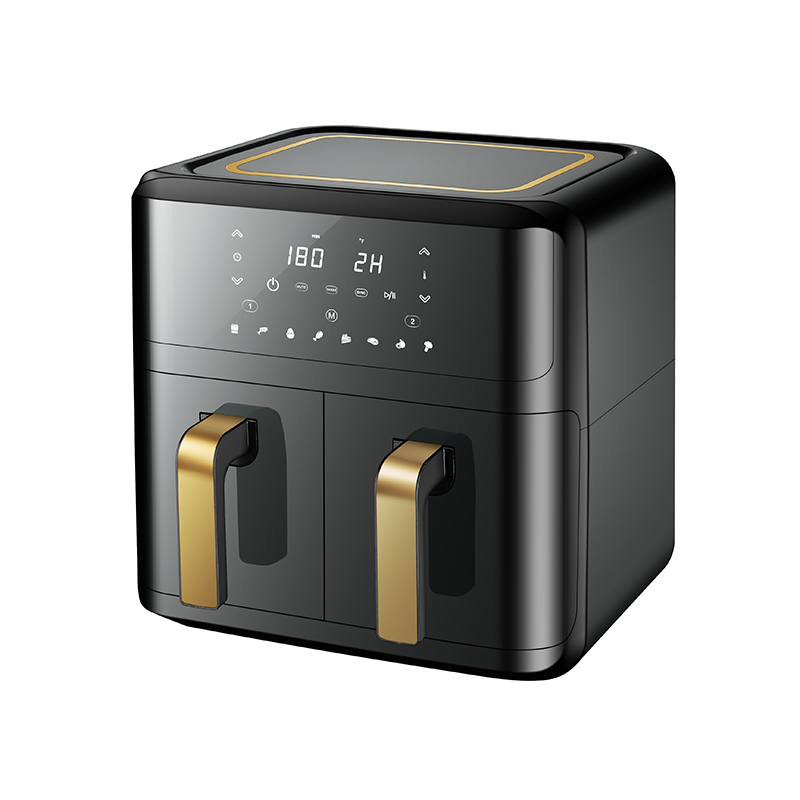
Digital thermostats hold temperature more consistently than simple bimetallic mechanical knobs. Consistent temperature makes a meaningful difference with delicate foods that sit on the edge between fully cooked and overcooked. Preset programs are not just a convenience; they store time-and-temperature curves that have been calibrated for specific food categories. For households that cook a wide range of ingredients, a digital model with multiple presets takes the guesswork out of everyday meals. Our 6-litre digital air fryer with 12 cooking programmes covers chicken, fish, chips, roasted vegetables, and baking in a single unit.
 6-Liter Digital Air Fryer with 12 Preset Cooking ProgramsThis model combines stable digital temperature control with ample capacity and twelve presets, making it easy to cook diverse meals without guesswork.View Product →
A Viewing Window
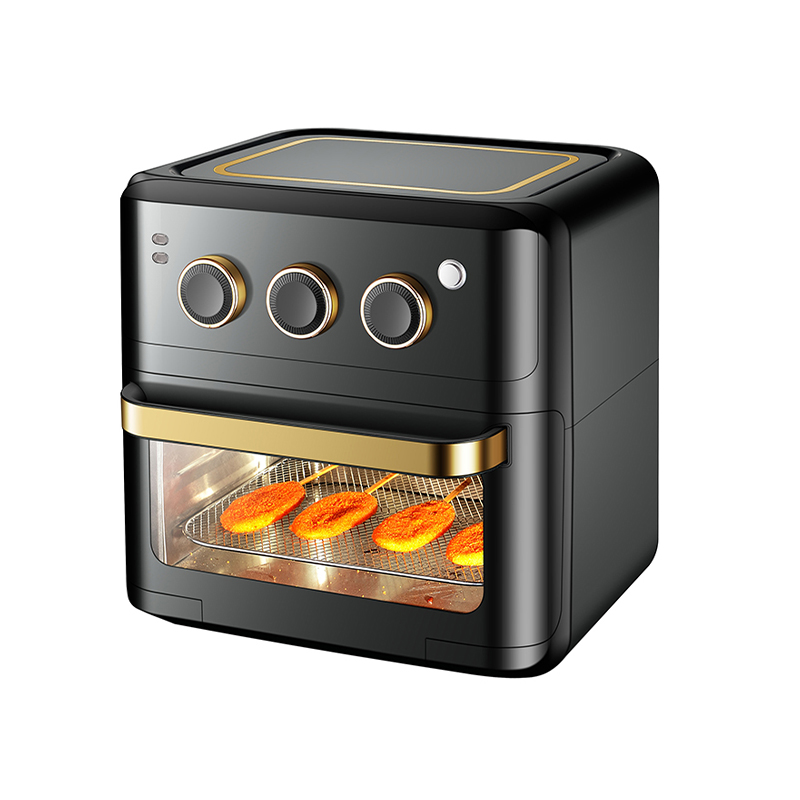
Opening the basket to check on food drops the chamber temperature by a significant margin every time you do it. If you are cooking something that needs close monitoring, such as kale chips or a piece of fish that can quickly turn dry, a viewing window lets you see what is happening without losing heat. A weighted, built-in window also gives you a more accurate view of the actual food colour than pulling the basket out into the room light. Our 5-litre digital model with a glass viewing window is a common choice among users who want that extra level of control.
 5-Liter Digital Air Fryer with Glass Viewing Window and Touch ScreenThe built-in viewing window lets you monitor delicate foods without opening the basket, preserving heat and helping you achieve the right color and texture.View Product →
Air Fryer Oven vs. Basket Model
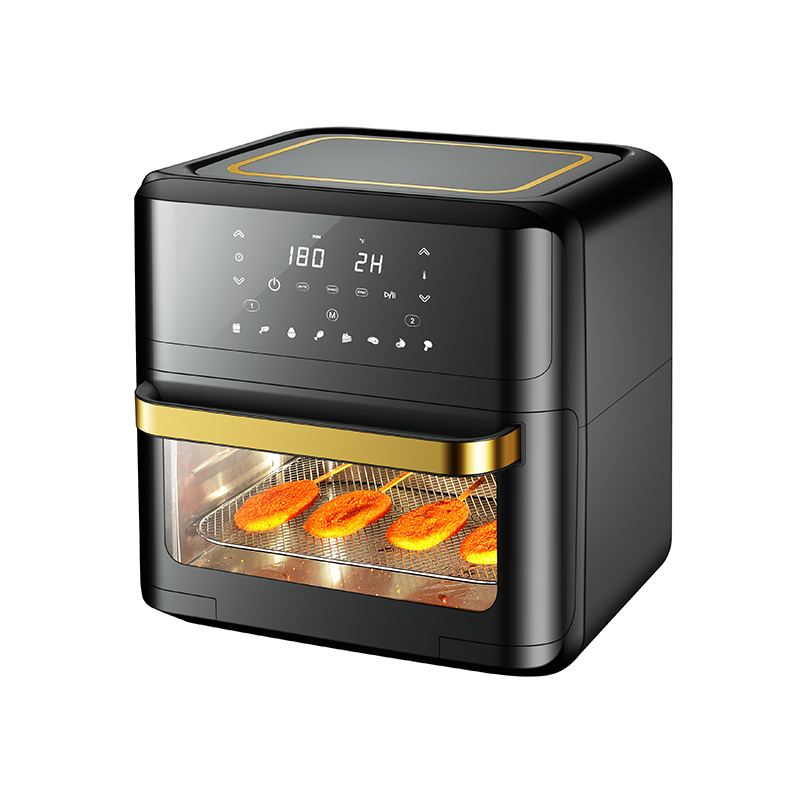
If you regularly want to roast larger vegetables, bake a small cake, or toast bread, an air fryer oven uses a different internal airflow pattern and holds a flat tray instead of a deep basket. The tray design lets delicate foods like fish fillets and sliced mushrooms lie flat instead of being tossed around. It is also easier to cook a full meal in one go because you can use multiple shelves. A 15-litre visible air fryer oven combines the dry-heat convection of a basket model with the larger capacity of a countertop oven, which makes it a better fit for family-sized portions of roasted vegetables and baked goods.
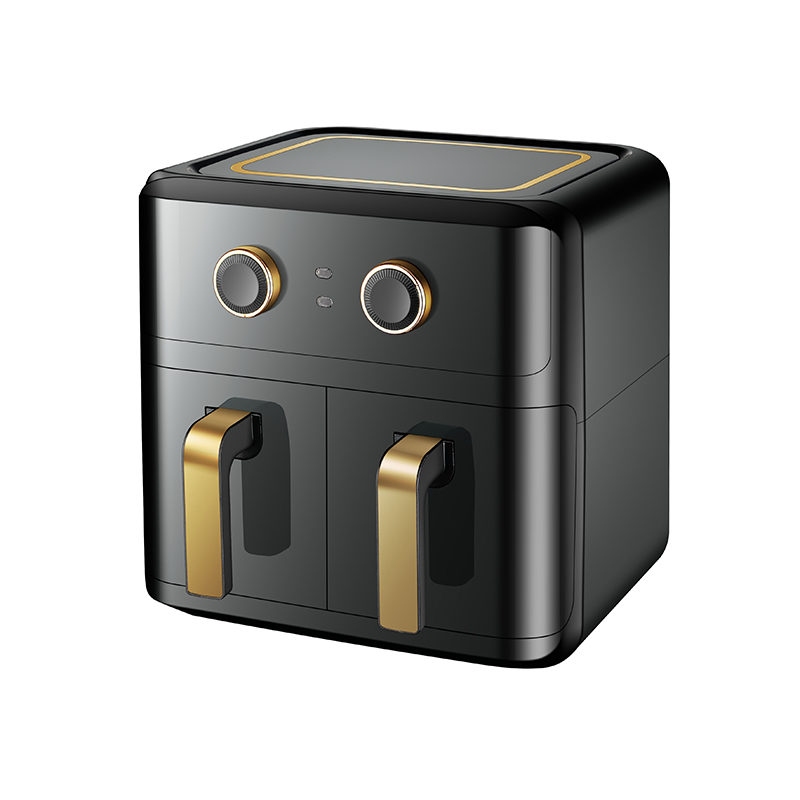 15-Liter Dual-Basket Air Fryer Oven with Rotating Barbecue MechanismWith two independent cooking zones and a large oven-style cavity, this model suits family meals and versatile cooking methods like baking and dehydrating.View Product →
The best machine for you depends on the foods you cook most often. If most of your meals are frozen fries, breaded chicken, and reheating leftovers, a basket model with presets is enough. If you also want to bake, dehydrate, or cook for more than two people at once, an air fryer oven is worth the extra counter space. You can compare the full range of basket models and air fryer ovens on our air fryer product overview page.
Daily Habits That Keep Your Air Fryer in Good Condition
Even when you avoid the five problem foods, everyday habits determine how long your air fryer stays clean and how consistent its cooking results remain. The following practices come directly from our quality team’s recommendations.
- Do not overfill the basket. Overfilling blocks airflow, creates uneven browning, and pushes food against the heating element where it can char and smoke.
- Clean the basket and mesh after every use. Oil residue left on the non-stick coating bakes on during the next run and becomes far harder to remove.
- Inspect the area below the basket. Small crumbs and kernel fragments can collect around the fan intake and affect airflow over time.
- Let the appliance cool completely before washing. Sudden temperature changes can warp the basket and the housing.
- Use silicone, wooden, or heat-resistant nylon utensils. Metal tools scratch the non-stick surface, and scratched areas start to stick and burn.
- Keep the rear exhaust vent clear. Blocked ventilation causes internal temperatures to rise beyond the intended range, which stresses the heating element and shortens its life.
Frequently Asked Questions
Can I use parchment paper or aluminum foil in an air fryer?
Yes, but you need to keep two rules in mind. Never cover the entire base of the basket because you will block the airflow that cooks the food. Use a piece of parchment that covers only the area under the food, and always place food on top to weigh it down. Perforated parchment rounds work best for dry foods like breaded chicken and potatoes. Aluminum foil is safe at air fryer temperatures, but avoid using it with strongly acidic foods like tomato sauce, because the acid can react with the foil.
What oil should I use for air frying?
Use an oil with a high smoke point, such as light olive oil, sunflower oil, canola oil, or avocado oil. Apply it in a thin layer. A spray bottle or oil mister gives you even coverage without over-oiling. Avoid butter or unclarified margarine in high-temperature cooking because the milk solids burn at air fryer temperatures and create smoke.
Why does my air fryer smoke even when I cook normal food?
The most common cause is leftover grease from a previous cook. Fat that drips off chicken wings or lamb chops lands on the heating element and smokes during the current run. If the smoke appears early in the cycle, inspect the area around the heating element and the gap below the basket. Clean the basket after every use, and wipe the chamber with a soft cloth when the appliance is completely cool.
What temperature should I use for most foods?
180–190°C covers the majority of everyday foods: frozen fries, chicken nuggets, breaded fish, hash browns, and roasted vegetables. Use 200°C for foods with thick skin that need extra crispness, such as duck breast or whole chicken thighs. Use 150–160°C for reheating leftovers and baking small cakes or muffins. If you prefer a more detailed guide, our article on achieving even heating in an air fryer explains how temperature relates to the fan and basket design.
Can I bake a cake in an air fryer?
Yes, if the cake tin fits inside your basket and there is at least one centimetre of space around it for air to circulate. A 4 to 6 inch round cake tin works well in a 5L or larger basket model. Use a low temperature, around 150–160°C, because the top of the cake can set before the centre cooks if the heat is too aggressive. Check with a skewer near the end of the suggested time.
How do I remove burnt food odor from my air fryer?
Wash the removable basket with warm soapy water. For the chamber, wipe it with a soft cloth dipped in white vinegar, then leave the basket open to air out for a few hours. If the smell persists, run the empty air fryer at 200°C for five minutes with a small bowl of baking soda placed inside the basket. This helps absorb residual odors without adding chemicals to the chamber.
The air fryer is a genuinely useful kitchen appliance when you match the food to its cooking principle. Wet batters, lightweight greens, popcorn kernels, uncooked grains, and whole eggs all fail because they were never designed for fast, dry, hot air. The good news is that each problem has a simple workaround, and once you adjust your expectations, the air fryer will reward you with consistently crisp results, an easier cleaning routine, and a machine that keeps performing well. If you are unsure whether a specific ingredient will work in your model, our team is happy to help—and if you are shopping for a new air fryer, look for the design features that actually matter for the way you cook.
 +86-0574-58011890