
 English
 Español
Most households answer yes — with the right model
An air fryer is not a replacement for your oven or stovetop. It is a fast, enclosed hot-air cooker that does one thing very well: it makes food crisp with significantly less oil. For most families that eat roast chicken, frozen fries, fish, vegetables, or reheated leftovers at least two or three times a week, a 3.5L to 6L model is genuinely worth buying. For a single person with a tiny counter and no regular need for crispy food, an air fryer may simply take up space. The decision hinges on your cooking routine, portion size, and willingness to learn a different timing and temperature system.
Here is the short version before we go deeper:
- Buy it if you want faster cooking than an oven, crisp texture with little oil, and easy cleanup for weeknight meals.
- Skip it if you prepare mostly soups, stews or steamed dishes, rarely eat anything breaded or browned, or already own a well-sized convection oven.
- Choose the size according to people you cook for: 3L for one or small batches, 3.5L for two, 5L for three to four, 6L or a larger air fryer oven for bigger families.
That bottom line is simple. The rest of this page covers how air fryers cook, where they save energy, where they fall short, and how to pick a model you will not regret.
How a hot-air fryer actually changes your food
An air fryer is basically a small convection oven with a powerful fan placed close to the food. A heating element in the upper chamber heats the air, and the fan pushes that hot air around the basket several times per second. The high airflow pulls moisture away from the surface and transfers heat quickly, producing the Maillard reaction that creates a brown, crisp crust. That is why food emerges with a texture closer to deep-frying than a regular oven even though you may use little or no oil.
Compared with a conventional oven, an air fryer has much smaller internal volume. The ratio of fan power to chamber volume is higher, so the air moves faster and the temperature stays more consistent. A typical 5L air fryer heats from cold to 180°C in three to five minutes, while a standard home oven can take ten to fifteen minutes. That preheat advantage, plus shorter cook times, is often the main reason people feel the appliance pays for itself.
It is not a magical health device, though. Most healthy results depend on what you put in the basket. A teaspoon of oil often improves browning and helps seasonings stick; you are still cooking with heat that triggers browning and produces flavour. Unlike deep-frying, you avoid absorbing a large volume of oil, but the nutritional result is only as good as the ingredients. For a deeper look at the physics, you can read our breakdown of the air fryer’s heating and airflow system.
The cooking effect also depends on basket shape and air duct design. Some units use deflectors to direct hot air to the middle of the basket, while others rely on a large fan blade and a circular tray. That is why two air fryers with the same wattage can produce surprisingly different browning.
What an air fryer is genuinely good at
Yes, the hype is partly real. The following advantages are measurable when you use the right model for the right task.
Faster from preheat to plate
Because the chamber is small and the fan circulates air aggressively, an air fryer cooks more quickly than a full-size oven. Example times for a 3.5L to 5L unit at 180-190°C:
- Frozen french fries: 15-18 minutes versus 25-30 minutes in a conventional oven.
- Breaded chicken breast: 20-22 minutes versus 30-35 minutes.
- Roasted broccoli or bell peppers: 10-12 minutes versus 18-20 minutes.
- Reheating pizza or fried chicken: 5-6 minutes versus a rubbery microwave result.
The speed is not simply about the wattage; it is about airflow. Even a 1200W model can cook faster than a 2400W oven because it heats a space ten times smaller.
Less oil without losing crunch
A traditional fried recipe might use several cups of oil. An air fryer typically needs one teaspoon to one tablespoon for a full basket of food, enough to help seasonings adhere and to promote browning. For frozen products that already have an oil coating, you can often use zero oil. This cuts fat and calories compared to deep-frying, although it will not make a fatty food healthy.
Cleanup is easier than frying or roasting
There is no pot of oil to dispose of and no greasy sheet pan covered with baked-on residue. A removable basket with a nonstick coating will usually rinse clean. Many baskets and trays are dishwasher safe, but hand-washing is recommended to protect the coating over years of use. If you line the basket with a correctly sized parchment paper, cleanup can be even faster. The trade-off is that the heating element and fan housing may still need a wipe after greasy cooks; that is true for any oven-style appliance.
Lower energy use than a large oven
Heating a 50-60 litre oven to cook one tray of food is inefficient. An air fryer’s smaller cavity and higher airflow reduce both preheating time and total cooking time. Under typical use, an air fryer consumes noticeably less electricity per meal than a conventional oven. We’ll break down the running cost in the chart later.
Versatility beyond “fries”
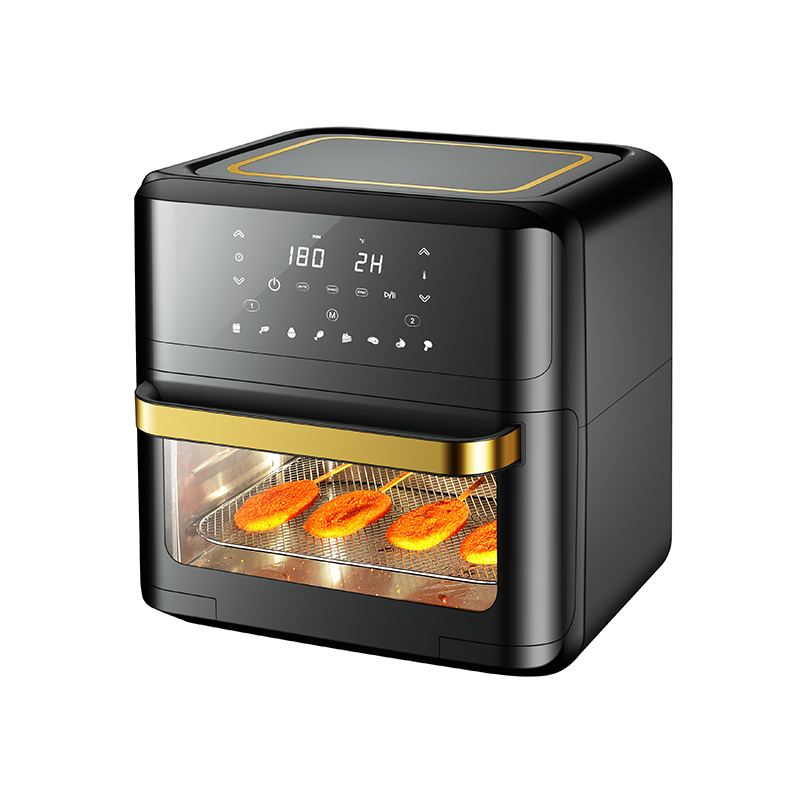
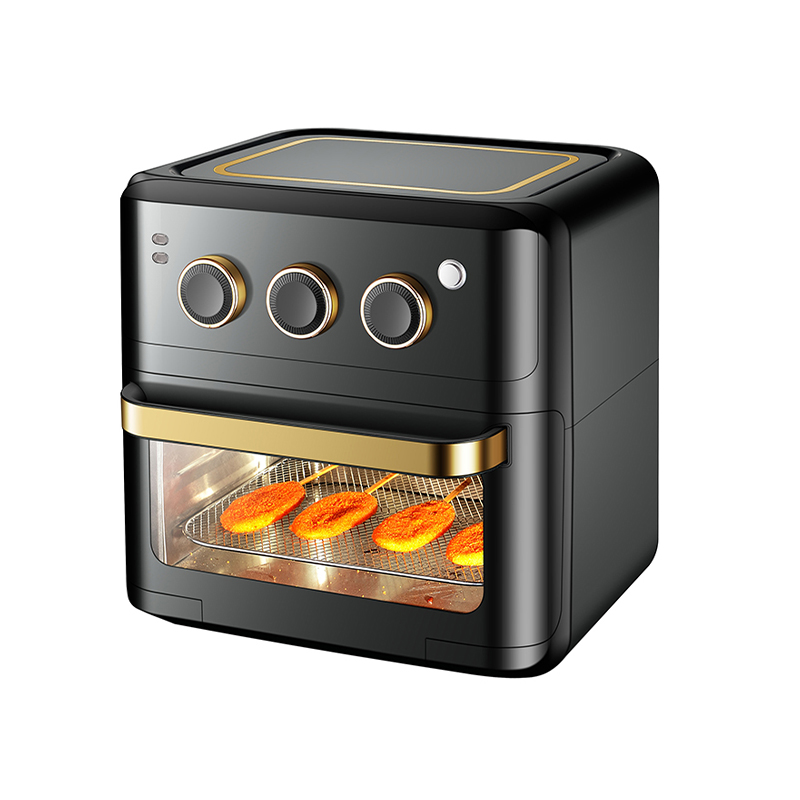
You can roast vegetables, reheat pizza, warm croissants, cook eggs, make garlic bread, bake small muffins, and even re-crisp leftovers. Digital models with preset programmes take the guesswork out of common items like fish, chicken, chips, steak and bakery products. Some models include a viewing window so you can check browning without pulling the basket out and losing heat. If you need more volume, an air fryer oven with rack and tray functions works like a small convection oven and is useful for sheet-pan cooking or toasting.
Five downsides that reviews often skip
An honest “worth it” answer must include the frustrations you will encounter.
1. They are louder than a normal oven
The fan moves a lot of air quickly. At full power you will hear a continuous noise between roughly 45 and 60 dB, depending on model, age, and build quality. It is not as loud as a blender, but it is audible and can be annoying in an open-plan kitchen.
2. Capacity is smaller than the liter number suggests
A 5L basket does not hold 5 litres of food if you want evenly crisped results. Food should sit in a single layer with small gaps, so the practical capacity may be only 2-3 litres of actual ingredients. For two people it is usually enough; for a large family you will need to cook in batches or use a dual-basket/oven-style model.
3. Nonstick coating requires careful handling
Most baskets are coated with PTFE or ceramic. Metal utensils or abrasive cleaners can scratch the surface, and scratched nonstick may reduce the release performance over time. Use wooden or silicone utensils and wash with a soft sponge. This is not a safety alarm, but it is a durability reality.
4. Cooking times and temperatures need a learning period
Every air fryer has its own airflow pattern and heat distribution. Your first few batches may be slightly underdone or overdone. You will soon learn the right temperature and time for your most cooked foods, but do not expect perfect results from the first recipe you follow.
5. Counter space and clearance
A 5L basket-style air fryer measures roughly 270 mm wide and 320 mm high; larger oven-style units are bigger. You need clearance above for heat to escape, and the appliance should not sit directly under a low cabinet unless the manufacturer provides a heat shield. Measure your space before buying, not after.
These limitations do not make an air fryer a bad purchase. They just mean it suits certain kitchens and cooking habits better than others.
Air fryer versus oven, stovetop and microwave
To decide whether it is worth buying, compare it with the appliances you already have. The table below shows a general take on typical household use; actual results vary by power, cavity size, and cooking method.
| Criteria | Air fryer | Conventional oven | Stovetop pan | Microwave |
|---|---|---|---|---|
| Preheat time | 3-5 min | 10-15 min | 2-3 min (pan) | None |
| Crisping ability | Excellent | Good | Very good | Poor |
| Practical capacity | 1-3 people typical | Large batches | Large batches | Medium |
| Energy per meal | 0.2-0.5 kWh | 0.6-1.2 kWh | 0.15-0.3 kWh | 0.1-0.25 kWh |
| Cleanup | Easy, one basket | Sheet pan or rack | Pot and maybe splatters | Turntable/container |
| Best tasks | Frozen food, breaded items, roast veg, reheating crispy food | Baking, casseroles, big roasts | Searing, frying, stir-fry | Reheating, defrosting, steaming |
The table shows that an air fryer is not a universal tool. It shines in a specific category: fast, small-batch air-based cooking. If that category matters to you, the value is clear.
How to choose the air fryer you will actually use
The best air fryer is the one that fits how you cook, not just the one with the largest LED display. Consider these factors in order.
Step 1: Pick a capacity that matches your portions
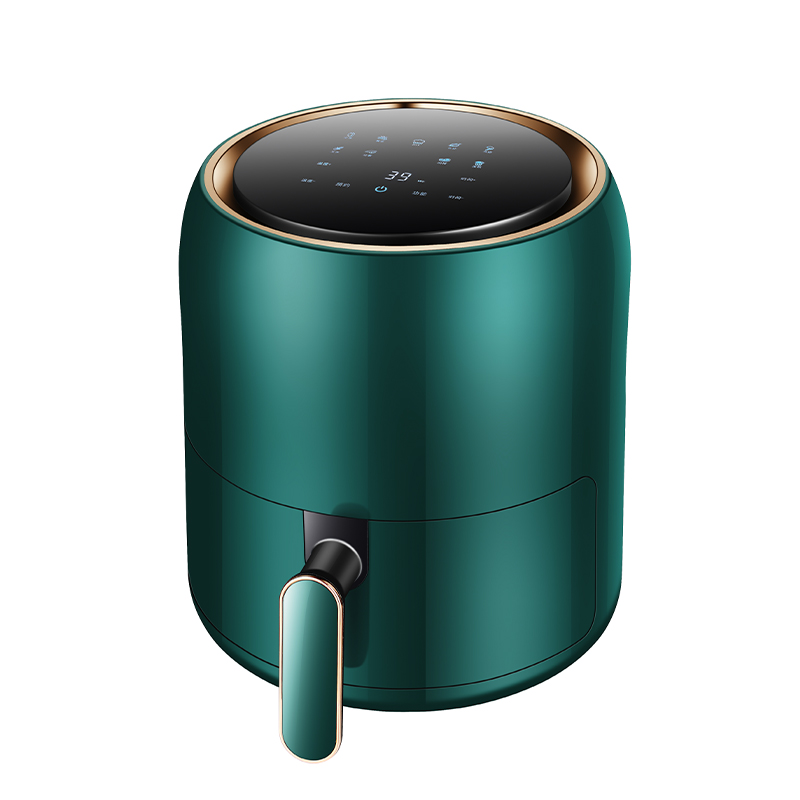
Manufacturers rate capacity in litres, but usable basket area and shape matter more. A 3L round basket fits about the same actual food as a compact 3.5L square basket because of the shape. General guide:
- 1-2 people: 3L to 3.5L
- 2-3 people: 3.5L to 5L
- 4+ people: 5L to 6L, or a 10L+ air fryer oven with racks
If you regularly cook a whole chicken or two batches of fries for a family, larger is better. If you only make small portions, an oversized basket will waste energy and counter space.
 DH-601A 3.5L Digital Air Fryer with 9 PresetsCompact digital model with preset recipes and a wide temperature range suits beginners while keeping counter space small and cooking simple.View Product →
Step 2: Choose the control system that fits your skill level
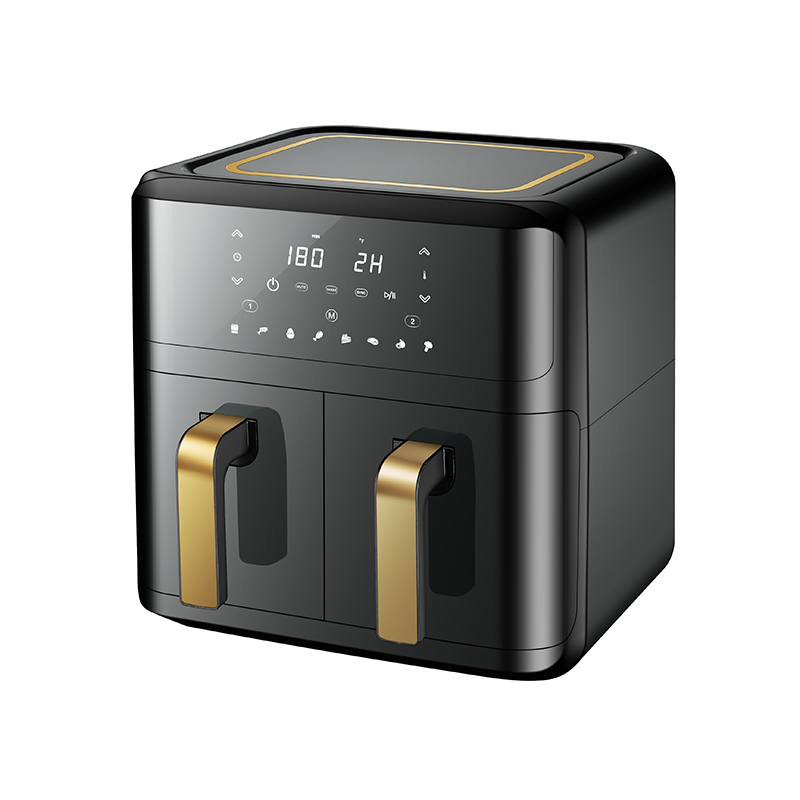
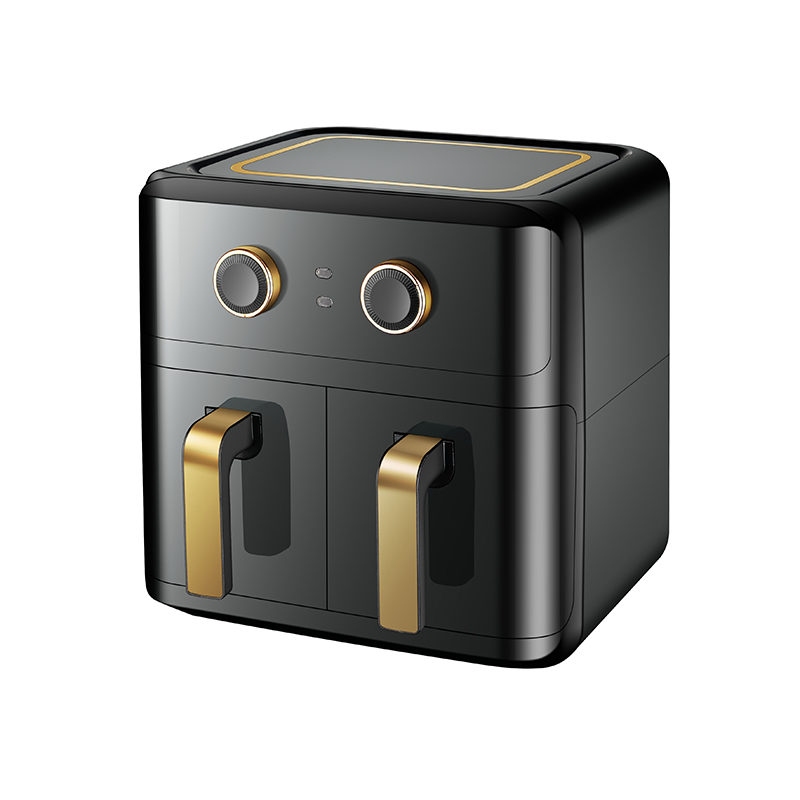
Manual air fryers give you two simple knobs: one for temperature, one for time. They are easy to understand, less prone to electronic failure, and usually cheaper. Digital air fryers add a timer display, one-touch presets, and sometimes a delay function. For beginners, digital presets reduce the guesswork; for experienced cooks, manual knobs may feel more direct. Look for a timer range of at least 60 minutes and a temperature range that starts near 80°C if you plan to dehydrate.
 DH-508A 6L Smart Air Fryer with 12 MenusLarge-capacity digital fryer with presets and safe viewing features fits families that cook whole chickens or bigger batches regularly.View Product →
Step 3: Decide if you want a viewing window
A viewing window lets you check colour without pulling out the basket. That seems small, but it changes how often you interrupt the cooking cycle. Models with a lit interior make it easier to judge doneness. If you frequently bake, cook chicken, or air-fry foods where end-point colour matters, a visible window is worth it. Without a window, you will rely on timers and experience.
 DH-308A 5L Air Fryer with Glass Window TouchscreenMid-size touchscreen model with a viewing window lets you monitor browning without opening the basket, ideal for color-sensitive foods.View Product →
Step 4: Look at wattage, airflow and temperature range together
Higher wattage usually means faster preheat, but only if the air duct design can spread that heat evenly. A 1200W manual unit can cook excellent fries, while a poorly designed 1800W unit may brown unevenly. Look for a published temperature range of at least 80°C to 200°C, an auto-shutoff, and a timer that switches off when the basket is pulled out. Those features improve safety and usability.
Step 5: Check the construction quality and certifications
The safety of an air fryer depends on the heating element insulation, wire connections, overheat protection and food-contact materials. For European markets, look for CE, RoHS and REACH compliance, plus GS if sold in Germany. For North America, UL or ETL marks indicate testing to safety standards. A reliable factory will also put a food-grade BPA-free label on baskets and trays. These marks matter more than a flashy brand story.
Step 6: Match the functions to your menu
If you mainly cook from frozen, preset buttons are helpful. If you cook large meats, a rotisserie or dual-basket model works better. If you want to toast bread or bake small cakes, an air fryer oven with shelves gives more versatility than a basket type. Decide your top three uses and choose the model whose features cover those uses, not the one with the longest specification list.
You can compare factory specifications and model sizes in our air fryer product line; it is organised by capacity, so you can see which basket volume matches your household.
How much electricity does an air fryer really use?
Running cost is a common reason to buy an air fryer, so let's make it concrete. Suppose you cook with a 1500W air fryer for 15 minutes on weeknights, or 1.25 hours per week. That is roughly 1.875 kWh per week. At 0.15 USD/kWh, the operating cost is about $0.28 per week, about $14.60 per year. A 2400W oven preheated for 10 minutes and cooking for 25 minutes would use around 1.4 kWh per meal, which is about $0.21 per meal at the same rate. If you would otherwise use the oven, an air fryer can save a significant portion of that cost.
The chart below shows estimated monthly electricity use for one typical recipe cooked three days per week, comparing a 1500W air fryer, a 2400W oven, a 1200W stovetop pan, and a 1000W microwave.
Values are estimates; actual consumption depends on model efficiency, cooking time and temperature. The pattern is still useful: the air fryer uses much less power than a full-size oven, but it is not the most efficient tool for every task. For reheating a bowl of soup, a microwave or kettle is cheaper. For roasting a large chicken, a well-insulated oven may be better for batch cooking.
Safety, materials and quality checks that matter
When an air fryer is cheap, people often worry about safety. The most important points to check are food-contact materials, certification marks, and electrical protection circuits.
Food-contact materials
The basket and tray should be made from food-grade materials, usually a nonstick-coated aluminium or steel pan, with a BPA-free plastic outer housing or handle. Avoid baskets that smell strongly of plastic or show clouded, thin coating. At factory level, food-contact items are tested for migration of heavy metals, PFOA and other restricted substances.
Electrical protection
A well-designed air fryer should have overheating protection, a thermal fuse, and an auto shutoff when the basket is removed. The power cord should be securely anchored and the connector should be heat resistant. Look for a product that has passed IEC/UL/CE testing; this means a third-party lab has checked for abnormal operation, high temperature, insulation and electrical strength.
Certifications and labels
- CE mark: required for sale in the European Economic Area
- GS mark: tested by an accredited body for product safety in Germany
- UL or ETL: safety tested for North American markets
- RoHS and REACH: restricted hazardous substances and chemicals in Europe
These labels appear on the rating plate or in the user manual. If a product only says “CE” without additional testing, be cautious; CE is often self-certified. UL/ETL and GS involve more rigorous independent testing. For mass-market products, factory QC may include a 100% electrical safety test on every unit before packaging.
Cleaning and care: the habits that make it last
Air fryers last longest when the heating element and fan area are kept relatively free of oil residue. The following habits reduce smells and avoid coating damage.
- Let the basket cool down slightly before washing; sudden cold water on a hot nonstick surface can accelerate wear.
- Wash the basket and tray with warm, soapy water and a soft sponge. Most are dishwasher-safe, but repeated dishwasher cycles can shorten the nonstick performance.
- Wipe the heating coil area with a damp cloth after 10-15 uses, especially if you often cook bacon or chicken skin.
- Clean the air inlet and outlet vents with a dry brush or vacuum to prevent dust accumulation.
- Do not use abrasive scrubbers or metal utensils in the basket.
If the unit has an interior light, check that the lens is cleaned with a non-abrasive cloth. A well-maintained 1500W air fryer can serve five years or more in a home kitchen.
Frequently asked questions
Is an air fryer worth buying for one person?
If one person often cooks frozen snacks, single chicken breast, or roasted vegetables, a 3L or 3.5L model is worth it because it heats quickly and can cook a small meal without a big oven. For someone who mostly uses a microwave and rarely needs crispy texture, it may not be worth the counter space.
Does an air fryer use a lot of electricity?
An air fryer uses less electricity than a conventional oven for the same small batch, but more than a microwave for reheating. Typical 1500W usage for 15 minutes is about 0.375 kWh per session; at average residential rates that is a few cents per day.
Can an air fryer replace an oven?
It can replace an oven for small, crispy items and many everyday meals. It cannot replace an oven for large roasts, multiple trays of baking, or casseroles that need uniform top heat. An air fryer oven with racks covers more of that gap, but still has a smaller capacity than a full-size oven.
Are cheap air fryers safe?
Price alone does not determine safety. A cheap air fryer can be safe if it has proper insulation, certified electrical components, and food-contact materials. Check for UL/ETL/CE/GS marks, inspect the cord and plug quality, and avoid units that smell like hot plastic strongly when idle.
How long does an air fryer last?
With normal use, a quality unit can last five years or more. The most common wear point is the nonstick coating inside the basket. Keep the coating clean and avoid metal utensils; if the coating flakes, replace the basket or the unit.
Who should buy an air fryer, and who should not
An air fryer is worth buying for the majority of households that want a quicker way to make crispy food, reduce oil use and avoid heating a large oven. The clearest candidates are:
- Frequent eaters of frozen French fries, nuggets, fish sticks, spring rolls, chicken wings or breaded snacks.
- People who currently use their oven for small oven-only meals and want to cut preheat time and electricity use.
- Families of two to four who want to roast vegetables or cook a small protein without using multiple pots.
- Anyone who cooks for one and wants a tiny 3L unit to avoid the cost and fuss of a full-size oven.
It is less likely to be worth it if your kitchen has no counter space, you mostly cook soups, stews, pasta or stir-fry, or you need to feed more than four people in one batch regularly. In those cases, a large oven, a stovetop pan, or a dual-basket model may serve you better.
If you decide the purchase makes sense, focus on capacity, safety marks, airflow design and cleaning convenience rather than the number of buttons. Read the dimensions, compare basket areas, and remember that the most expensive model is not automatically the best cooking machine.
 +86-0574-58011890