
 English
 Español
Yes, you can put food directly in the air fryer basket — and for most dishes, it is the best way to cook. The basket is built for direct food contact: it is made from food-grade materials, finished with a non-stick surface, and perforated so hot air can reach the food from every direction. This guide explains exactly when to place food directly on the basket, when a liner is a better idea, and how small loading and preparation choices change the final texture of your food.
If you have just bought your first air fryer, the question usually comes up because the instruction manual does not always spell out the obvious. You may have seen recipe videos where someone lines the basket with parchment paper, and other videos where food goes straight onto the metal basket. Both approaches work in the right situation, but they are not interchangeable. Understanding the difference is the first step to consistently crispy, evenly cooked results.
Yes, You Can Put Food Directly in the Air Fryer Basket
Direct placement means putting raw or prepared food directly on the perforated surface of the basket, without any liner, tray, or wrap in between. This is the default configuration for most air fryer cooking. There is nothing unsafe about food touching the basket surface in a properly designed appliance. The basket coating is formulated for food contact, and the base materials are selected to withstand temperatures well above the maximum cooking temperature of the appliance.
To understand why direct placement works, it helps to look at how the appliance actually cooks. Inside the air fryer, a heating element sits above the basket. A fan pushes hot air down, around, and through the perforated holes. The food in the basket is surrounded by moving air on all sides, which rapidly evaporates surface moisture. That dry heat is what creates browning and crispiness without deep oil.
The basket itself also plays a thermal role. When food sits directly on the basket surface, the coated metal contacts the underside of the food and transfers heat by conduction, in addition to the convection heat from the air. This combination of conduction and convection is one reason a basket air fryer can produce a crispier result than a large convection oven, where the food usually rests on a tray and heat reaches it mostly from above.
Most air fryers operate in a temperature range between 80°C and 200°C, with cooking cycles from 5 to 30 minutes. Because the air is moving at high speed, food cooks noticeably faster than still-air ovens. That speed is also why the basket needs to be loaded carefully: when the air cannot pass freely through the food, the cooking rate drops and textures become uneven.
Why the Basket Itself Is Designed for Direct Food Contact
At the factory level, air fryer baskets are engineered as food-contact components. The basket body is usually made of carbon steel with a non-stick coating, or stainless steel in higher-end models. The coating is applied and cured under controlled temperatures to create a stable surface that does not release harmful substances under normal cooking heat.
Food-grade materials and non-stick coatings
Because we design and produce air fryer baskets in-house, the basket is treated as one of the most important parts of the appliance. The raw material is food-grade carbon steel, and the non-stick coating is applied in multiple layers, then cured at high temperature. Coating adhesion, scratch resistance, and heat resistance are verified through sample testing. Before a new basket design enters production, the whole assembly goes through temperature cycling tests, over-temperature abuse tests, and food-contact validation.
These details matter because they determine whether direct food contact is actually safe. If a coating is poorly applied or under-cured, it can degrade over time and release small flakes into the food. A basket that cannot tolerate repeated heating cycles will lose its release properties, and food will start sticking to the surface. That is why a mature supplier does not simply stamp a basket shape and call it finished; the coating recipe, application thickness, curing profile, and mesh design all have to be matched to the heating power and airflow of the specific model.
What the non-stick surface means for everyday cooking
A properly designed non-stick basket means you can shake a basket of fries without everything sticking to the bottom. It also means you do not need to add much oil. One teaspoon of oil tossed with fresh potatoes is usually enough to get golden-brown edges.
However, non-stick does not mean stain-proof or burn-proof. Sugary marinades, cheese, and rice batter can still leave residue if cooked at too high a temperature. And the coating will not last forever. The practical rule is: put a small amount of oil on the food, not on the basket, and avoid metal utensils that can scratch the surface.
When Direct Placement Works Best
Most foods cook better when placed directly on the basket, but a few categories benefit more than others. The table below summarizes the loading method that gives the best texture for common foods.
| Food type | Best loading method | Why it works |
|---|---|---|
| Frozen fries, nuggets | Direct, single layer | Maximum hot-air contact gives crisp, even texture |
| Fresh vegetables | Direct, light oil, single layer | Surface caramelization with no pooled moisture |
| Chicken wings, drumsticks | Direct, spaced apart | Fat renders and runs off, skin crisps evenly |
| Breaded chicken or fish | Direct, shake gently once | Breading sets and adheres to the protein |
| Leftovers | Direct, small batches | Moisture evaporates quickly, restoring crispness |
| Cheese-filled items | Liner optional | Melted cheese is easier to remove from a liner |
| Marinated meat | Direct, pat dry first | Surface browning without excess liquid causing steam |
| Bacon | Direct, in one layer | Fat drains away from the surface as it renders |
The common thread is that direct contact helps when your goal is surface drying and browning. Foods with a relatively dry outer surface — frozen products, fresh vegetables, meat with skin — release most of their moisture at the surface, where moving air can carry it away. Placing them directly on the basket lets the underside dry and brown instead of sitting in a puddle of their own juices.
When a liner is used, it can trap moisture if liquid pools on top of it. For foods like wings or meatballs that release juices, a liner without perforation will cause the bottom to steam rather than crisp. If you want both crispiness and easy cleanup, place food directly on the basket and only use a liner underneath when cooking something very sticky or heavy in sauce.
When You Might Want to Add a Liner Instead
There are perfectly good reasons to use an air fryer liner, and many experienced users keep a roll of parchment liners for specific jobs. The important thing is to choose the right liner and place it correctly so it does not interfere with the airflow.
Perforated parchment liners are the safest choice. They are shaped to match the basket, they allow hot air to pass through the bottom, and they catch drips from the food above. Silicone liners are reusable and easy to clean, but they are thicker and slightly reduce airflow, so you may need to add a few minutes to the cooking time. Aluminum foil should be used with more caution: it must be pressed firmly around the edges so the fan cannot lift it toward the heating element.
The biggest risk with any liner is blocking the holes in the basket. If a sheet of paper or foil covers the entire bottom, the air entering from below is reduced, and the underside of the food stays pale and soft. Always choose a liner designed for the basket size, leave the perimeter vents clear, and never let the liner extend above the basket walls. For a closer look at how airflow patterns affect cooking, this article on how to achieve uniform browning explains the structural details of the basket and fan design.
When is a liner worth it? For fatty and sticky foods: mozzarella sticks, stuffed mushrooms, marinated tofu, honey-glazed chicken, or anything with teriyaki or barbecue sauce. These foods tend to leave burnt sugar or cheese residue on the basket, which then requires soaking to remove. A liner catches the residue and shortens cleanup from ten minutes to one.
For routine cooking — fries, vegetables, breaded proteins, reheating leftovers, most frozen products — direct placement is faster and produces a superior texture. There is no need to buy consumables, and the basket is quick to wash when you do it right after the food is offloaded.
What Happens When You Overfill or Block Airflow
Overfilling is the most common reason for disappointing air fryer results. When the basket is packed to the top, the hot air cannot circulate between the pieces. The food on the outside may look brown while the pieces in the middle are still pale and soft. This is not a defect in the appliance; it is a physical limitation of how heat moves through a crowded bed of food.
As a rule of thumb, fill a basket no more than two-thirds to three-quarters full. For foods that need to crisp on all surfaces, arrange them in a single layer with a small gap between pieces. This is especially important for french fries, roasted chickpeas, and anything breaded.
Overfilling does not just affect browning. It also extends cooking time, which means the heating element works longer and the fan runs at high speed for a longer period, using more energy. In extreme cases, a packed basket can push food against the mesh so tightly that airflow stops almost completely, producing a steamed texture that is the opposite of what an air fryer is supposed to deliver.
Shaking also affects airflow. For most foods, it is worth shaking the basket once or twice during the cooking cycle. The movement repositions the food so different surfaces face the heat source and the bottom of the basket. Frozen fries usually benefit from a shake at the halfway point; chicken wings or whole vegetables can be flipped once.
Temperature choice matters too. Using too high a temperature for a delicate food will brown the surface before the interior reaches the right internal temperature. Using too low a temperature for a dense food like a potato wedge will dry out the exterior before the center is cooked. The effective range for most air fryer recipes is between 160°C and 200°C, and most digital models include preset programs that set the time and temperature for common dishes.
Temperature reference for foods cooked directly in the basket
Times are approximate and assume a basket filled to the recommended level, not a full load. If you reduce the batch size, the food tends to cook slightly faster because the air circulates more freely. Using a food thermometer remains the most reliable way to confirm that meat and poultry are fully cooked.
How Basket Design Affects Crisping Performance
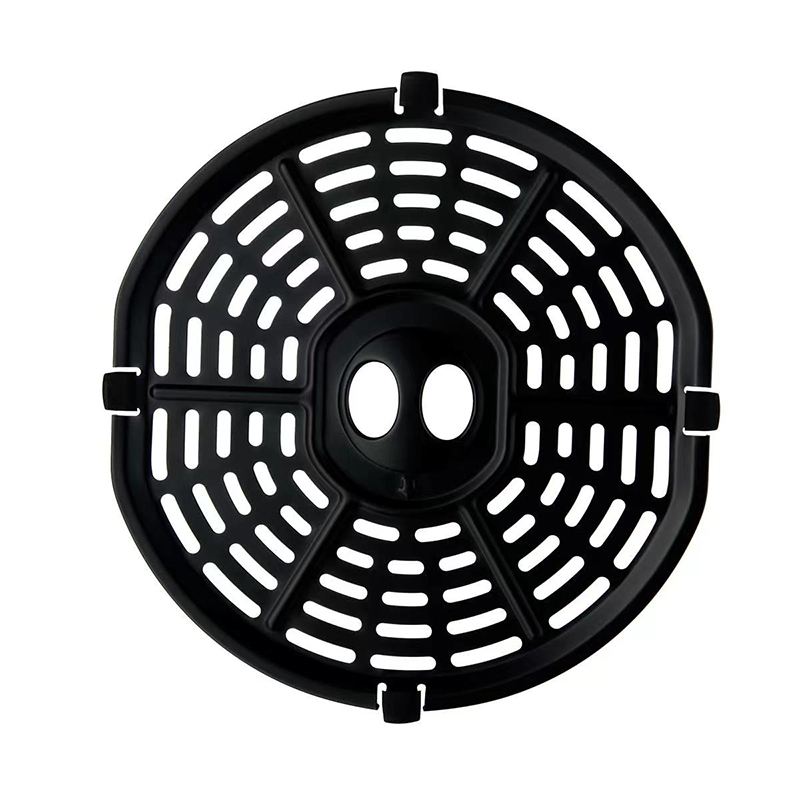
Not all baskets are equal. The depth of the basket, the size of the perforations, the gap between the basket and the heating element, and even the shape of the basket handle influence how well food cooks. For a given volume, a wider, shallower basket will produce crisper results than a deep, narrow one, because a larger surface area is exposed to the hot air flow.
We design our basket air fryers around this principle. A 3.5L digital model, for example, is shaped so the distance from the fan to the food surface stays short enough to keep the air velocity high. In larger 5L and 6L baskets, the mesh opening pattern is different so the air still penetrates a fuller load without leaving a pale center.
Models with a viewing window let you monitor the color of the food without opening the basket and losing heat. If you are new to a particular recipe, a viewing-window model helps you calibrate time and temperature faster. Dual-basket models allow two zones at different temperatures, which matters when cooking proteins and sides at the same meal.
Choosing the right basket capacity is also a direct-cooking decision. If you cook for one or two people, a 3L to 3.5L basket is usually enough and heats up faster. If you cook for a family or want to prepare the whole main course in one batch, a 5L or 6L basket gives you room to keep one layer of food without overcrowding. The number of presets on a digital model simply packages what an experienced user would set manually. For a full overview of basket sizes and control styles, you can browse our air fryer product range.
Air fryers designed for direct basket cooking
The following models from our range are engineered with baskets that handle direct food contact well. Each one uses a food-grade non-stick basket and a high-speed hot-air system, and they differ mainly in capacity, control interface, and preset programs.
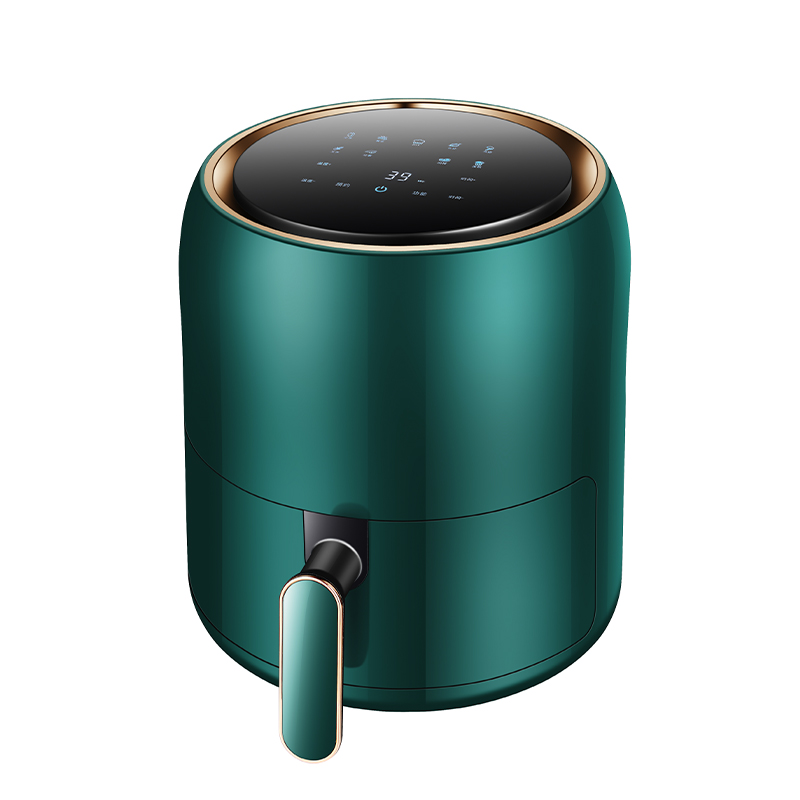
 Compact 3.5L Air Fryer with Digital Panel and 8 Preset ProgramsThis 3.5L model suits smaller kitchens while still offering eight presets, including fry, grill, and roast. Its removable non-stick basket simplifies cleanup, making it a practical entry point in the range.View Product →
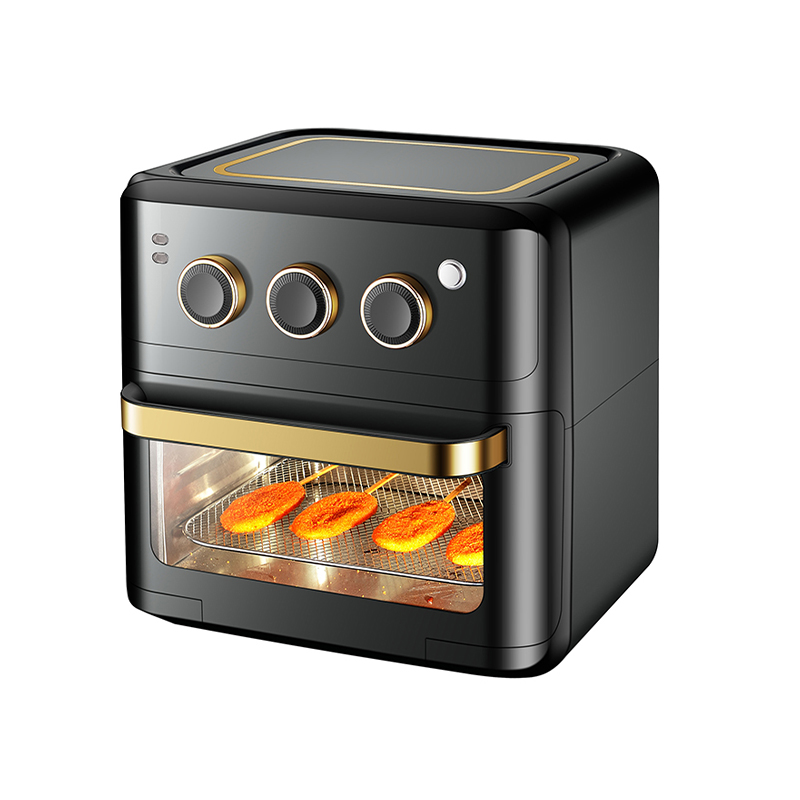
 5L Air Fryer with Viewing Window and Touchscreen ControlsThe 5L version adds a glass viewing window so you can watch browning without opening the basket. Its digital touchscreen and eight presets provide convenient control, ideal for mid-sized households.View Product →
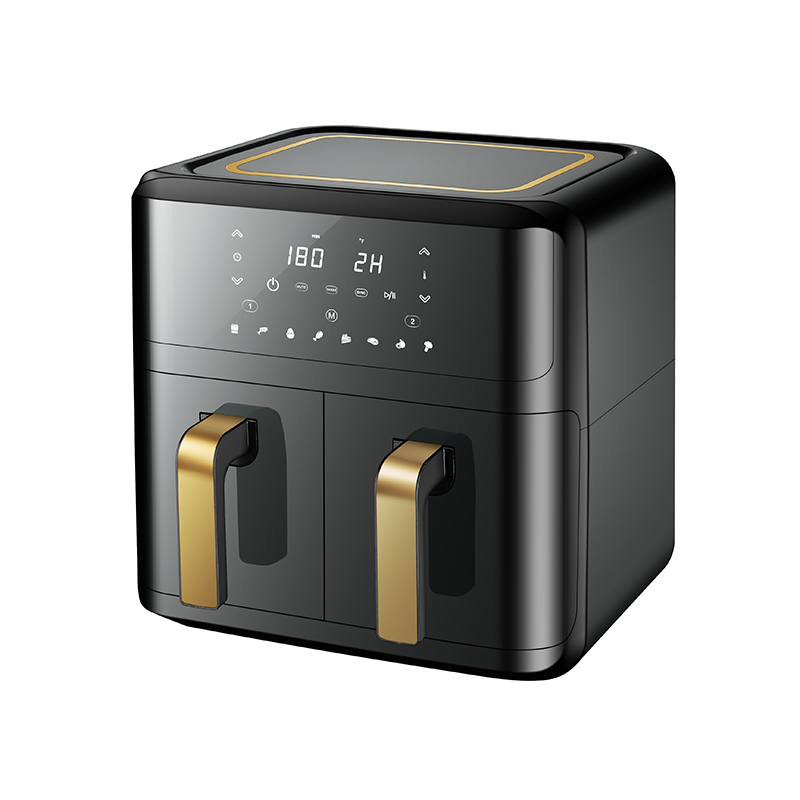
 6L Family-Size Air Fryer with 12 Preset Menus and Digital DisplayWith the largest 6L capacity and twelve cooking presets, this model handles family-sized loads. Its digital panel and wide menu options offer versatile, low-oil cooking for a range of dishes.View Product →
All three baskets can be removed for cleaning, and the non-stick surface is designed to release food easily. The 3.5L model is a compact choice for smaller kitchens, the 5L viewing-window model adds a transparent panel so you can watch the browning progress, and the 6L model offers the largest capacity with twelve cooking presets for a family-sized load.
Cleaning and Maintenance After Direct Cooking
Direct cooking means food residue — oil, crumbs, and juices — will end up on the basket. That is normal and it should not be left to sit. Clean the basket soon after cooking, while the residue is still soft.
Most removable baskets have a non-stick coating and can be washed by hand with warm water and a soft sponge. Some are also dishwasher-safe, but repeated dishwasher cycles will wear the coating faster than hand washing. Check the user manual of the specific model. After washing, dry the basket completely before reinserting it into the appliance.
Avoid abrasive pads and aggressive dishwasher detergents, because they can etch the non-stick surface over time. If food has burned onto a spot, fill the basket with warm water and a little dish soap and let it soak for ten to fifteen minutes. The residue will come off without scraping.
Do
- Pat food dry before placing it on the basket
- Leave space between pieces so hot air can move
- Shake the basket once during most cooking cycles
- Use warm soapy water and a soft sponge
- Dry the basket fully before storing it
Don't
- Don't pack the basket above three-quarters full
- Don't use metal utensils on the non-stick coating
- Don't preheat an empty liner without food on top
- Don't put wet batter directly on the mesh
- Don't wash the basket while it is still hot
The heating element and the fan inside the appliance also need occasional attention, especially if you cook fatty foods regularly. Turn off and unplug the appliance, let it cool completely, and wipe the element area with a soft dry cloth to remove oil film and dust. Never immerse the main body in water.
Frequently Asked Questions
Can I put raw chicken directly in the air fryer basket?
Yes. Raw chicken, including breasts, thighs, wings, and drumsticks, can be placed directly on the basket. The high-temperature air cooks the surface quickly, and the internal temperature continues to rise. Use a food thermometer to confirm the internal temperature reaches 74°C (165°F) before serving. Pat the chicken dry with paper towels before placing it in the basket if you want crisper skin.
Do I need to preheat the air fryer before adding food?
Most basket air fryers come up to temperature in two to four minutes. Preheating is not strictly required for frozen foods or small pieces, but for dense items like chicken breasts or thick potato wedges, a short preheat helps the outside sear immediately and keeps the inside moist. Several digital preset programs include a preheat step automatically.
Can I put parchment paper directly on the basket?
Yes, but only if the paper has holes or is designed for air fryer use, and it should be held down by food. Do not preheat the basket with paper inside and no food on top. With strong air circulation, a light sheet of paper can lift and touch the heating element.
Why does food stick to my basket even though it says non-stick?
Sticking usually comes from three causes: the basket is not clean, the food surface is too wet, or the cooking temperature is too low. Dry the surface of the food, brush a small amount of oil on it, and make sure the basket has been washed, dried, and fully cured after previous washing. Frequent dishwasher cleaning can also reduce the coating's release performance over time.
Can I put wet batter or tempura directly into the basket?
Thin wet batter will drip through the holes and create smoke, and the batter will stick to the mesh before it sets. Use a liner with holes or a separate silicone tray for wet batter. Dry breaded foods that have been coated in flour or breadcrumbs can go directly on the basket.
How much food can I cook at once in a basket air fryer?
A 3.5L basket handles roughly 300 to 450 g of fries in a single layer. A 5L basket takes about 450 to 600 g. A 6L basket can manage 600 to 800 g. In every case, it is better to cook in two smaller batches than to overload the basket and end up with unevenly cooked food.
Can I place an oven-safe small tray or baking pan inside the air fryer basket?
Yes. A small glass or metal baking dish that fits inside the basket can be used for cakes, gratins, and messy casseroles. Leave a gap around the dish so the air can still circulate inside the basket.
The Bottom Line
Putting food directly in the air fryer basket is safe, effective, and usually the best way to get crispy, evenly cooked results. The basket is engineered for direct food contact, and the non-stick coating removes the need for oil or grease. The exceptions are sticky, saucy, or heavily coated foods that create a cleanup problem; in those cases, a properly sized liner is a reasonable accessory.
Because the baskets are designed and produced in-house, material quality and airflow uniformity are carefully controlled in every model we ship. When you compare air fryers, the features that affect direct cooking are the basket material, the coating quality, the mesh pattern, and the match between heating power and basket volume. Direct placement is not a shortcut; it is the way the appliance was designed to be used.
 +86-0574-58011890