
 English
 Español
Can You Put Frozen Food in an Air Fryer? Yes, With Two Conditions
Pull a bag of frozen fries out of the freezer, tip them straight into the basket, set 200°C for 16 minutes and shake once at the halfway mark. The fries come out golden and crisp, with no thawing step and no added oil. That result is not luck. Forced-air convection was designed around exactly this job: it strips surface moisture away quickly while the interior finishes thawing and cooking at the same time.
Two conditions decide whether you get that result or a soggy disappointment. The first is basket load. You need one layer of food with visible air gaps between pieces, because the hot air has to reach every surface. The second is food geometry. Anything thicker than roughly 3 cm at its densest point needs extra time, and any product with a wet batter coating needs a slightly lower temperature than the packaging suggests.
Everything below is the detail behind those two conditions: why some manuals still say "do not cook from frozen", which frozen products are worth putting in the basket, what times and temperatures actually work in practice, how to read a food thermometer correctly, and how machine design changes the outcome from the first minute.
Why Some Manuals Still Warn Against Cooking From Frozen
If you find a line in your manual telling you to thaw food first, the warning is rarely about cooking capability. It is about basket size, user behaviour and the manufacturer covering itself against the worst case. These are the four situations the warning is really aimed at.
Dense frozen blocks
A 400 g frozen chicken breast or a whole frozen joint dropped into a 3 L basket will brown hard on the outside long before heat reaches the centre. The machine is working correctly. The load is simply too large and too dense for the air gap around it.
Heavy frost and ice crystals
Frozen food that has been in the freezer for months carries a thick layer of surface frost. That ice melts first, and the meltwater collects in the bottom of the basket. Food sitting in that water steams instead of crisping, and the underside stays pale and soft.
Wet batter coatings
Beer-batter onion rings and similar wet-batter products can split and stick during the first three minutes from frozen. This is a temperature problem rather than a freezing problem, and it is solved by dropping the setting by 10°C and adding a few minutes.
The lowest-common-denominator instruction
One sentence has to cover every food a customer might try, in every basket size, at every skill level. Writing "thaw first" costs a manufacturer nothing and protects them from the one customer who fills the basket to the rim with a frozen roast.
What Actually Happens Inside the Basket When You Start From Frozen
The moment frozen food goes in, the basket temperature collapses. On a 5 L digital unit running at 1500 W, adding 400 g of frozen fries at -18°C drops the internal air temperature from 200°C to roughly 130°C. It takes around 90 to 120 seconds to climb back to the set point. That recovery window is the single biggest reason frozen food takes longer than chilled food, and it is also why preheating matters more for some products than others.
Stage 1: Surface ice melts
The outer film of ice absorbs a large share of the available heat and converts to water. Nothing browns yet. If your food is sitting in a puddle at this stage, that water has to evaporate before any colour can form.
Stage 2: Surface dehydration
The water film evaporates and the food surface dries. This is the quiet phase where most of the visible change happens inside rather than outside. Thick items are still conducting heat inward through their own mass.
Stage 3: Browning and crisping
Once the surface is dry, it can finally exceed 140°C and Maillard browning begins. Starch crusts set, sugars caramelise and the exterior turns golden. Pull the basket too early and you are eating stage two food: cooked, safe, but pale and limp.
Understanding those three stages explains almost every frozen-food problem. Pale chips usually mean the basket was overcrowded and stage two never finished. Burnt edges with a cold centre usually mean the temperature was too high and the surface raced ahead of the interior.
Which Frozen Foods Work Well and Which Need a Different Approach
Not every frozen product behaves the same way in moving hot air. The table below groups the common categories by how well they tolerate being cooked straight from the freezer.
| Frozen product | Cooks well from frozen | What to watch for |
|---|---|---|
| Thin-cut fries, wedges, hash browns | Excellent | Single layer only; shake the basket once at the halfway point |
| Breaded nuggets, goujons, fish fingers | Excellent | Coating already contains oil; no extra oil needed |
| Chicken wings, drumsticks, small thighs | Good | Add 8 to 12 minutes over chilled timing; verify with a thermometer |
| Whole chicken breasts | Workable | Only in 5 L or larger baskets; check the centre before serving |
| Meatballs, burger patties, sausages | Good | They release fat and juice; empty the drawer if liquid pools |
| Small frozen pizzas and flatbreads | Good | Line the basket with perforated paper; check the base at 10 minutes |
| Spring rolls and dumplings | Moderate | Wrappers can split; spray lightly and cook at 190°C |
| Breaded cheese sticks | Moderate | Filling liquefies fast; high heat, short time, watch closely |
| Breaded fish fillets | Good | Flip once; the crumb can separate if the basket is overloaded |
| Mixed frozen vegetables | Moderate | They steam rather than roast; finish at 200°C for the last few minutes |
| Whole frozen joints and whole birds | Not recommended | Outer layers overcook long before the centre passes safe temperature |
| Shell-on shellfish from frozen | Not recommended | Uneven shell thickness causes unpredictable results |
The pattern is straightforward. Products that were engineered for oven baking and already carry a starch or breadcrumb shell translate almost perfectly to air frying. Products with high water content or irregular thickness need either extra time, a lower temperature, or a different appliance entirely.
Frozen Food Air Fryer Time and Temperature Chart
The figures below are a practical starting point rather than a fixed law. Basket size, load weight and the actual wattage of your unit will shift results by two to four minutes in either direction. Always treat the shorter number as your first check point.
| Frozen food | Temperature | Time | Turn or shake |
|---|---|---|---|
| Thin-cut fries | 200°C | 14 to 18 min | Shake at halfway |
| Thick-cut fries | 200°C | 18 to 22 min | Shake twice |
| Chicken nuggets | 190°C | 10 to 12 min | Shake at halfway |
| Breaded goujons | 190°C | 12 to 15 min | Shake at halfway |
| Chicken wings | 180°C | 22 to 26 min | Turn at 12 minutes |
| Chicken breast | 180°C | 25 to 30 min | Turn at 15 minutes |
| Breaded fish fillets | 190°C | 12 to 15 min | Turn at halfway |
| Burger patties | 190°C | 16 to 20 min | Turn at 9 minutes |
| Meatballs | 180°C | 12 to 15 min | Shake at halfway |
| Small frozen pizza | 180°C | 10 to 14 min | No turning |
| Spring rolls | 190°C | 10 to 12 min | Turn at halfway |
| Dumplings | 190°C | 10 to 14 min | Shake at halfway |
| Breaded cheese sticks | 200°C | 8 to 10 min | No turning |
| Hash browns | 200°C | 12 to 15 min | Turn at halfway |
| Mixed vegetables | 190°C | 12 to 15 min | Shake twice |
For chicken specifically, the timing varies enough between portion sizes that a dedicated reference is worth keeping on hand. Our detailed breakdown of air fryer chicken breast timing by weight and thickness covers the frozen-to-chilled conversion in more depth.
Preheat or Not? The Decision Depends on the Food, Not the Habit
Preheating is not a universal rule and it is not a universal waste of time. It is a tool that helps some frozen products and does nothing for others. The deciding factor is whether the food's surface needs an immediate hit of high heat or whether it benefits from a slower ramp.
Products that benefit from a preheat
- Breaded items with a fine crumb, such as nuggets and fish fingers, where a fast crust set stops the coating from absorbing surface moisture
- Thin-cut fries and hash browns, where a cold start tends to produce a pale, slightly greasy finish
- Anything with a large flat surface area relative to its thickness, such as a small frozen pizza base
Products that do not need a preheat
- Thick items such as whole chicken breasts, large meatballs and burger patties, where a gradual rise gives the centre more time to catch up
- Frozen vegetables, which release enough steam on their own and would only dry out faster with a preheat
- Any load where you are already adding three or four minutes to the recommended time because the basket is at two-thirds capacity
If you do preheat, three minutes at the cooking temperature is enough for most units in the 1500 W range. Longer than that wastes energy without changing the result.
The Working Order for Cooking Any Frozen Food
Once you have run this sequence a few times it becomes automatic, and it removes most of the variability people complain about.
- Check the packaging for oven instructions and treat those as your baseline, then subtract 20°C and roughly 20 percent of the time.
- Judge the basket honestly. If the food cannot sit in one layer with visible gaps, cook it in two batches. Two fast batches almost always beat one slow, uneven one.
- Spread the load evenly and leave the corners of the basket uncovered so air can circulate around the edge.
- Set the temperature first and the time second. Temperature controls the texture; time only controls how far the process has gone.
- Do not add oil to breaded products. Do add a light spray to bare vegetables, dumplings and anything with a dry starch surface.
- Hold off on salt and wet sauces until after cooking. Salt draws moisture to the surface and sauces burn before the interior is done.
- Start checking two to three minutes before the lower end of your time range, especially the first time you cook a particular product.
- For any meat or poultry, verify the centre with an instant-read thermometer rather than relying on appearance.
Food Safety When Cooking Meat From Frozen
Cooking meat from frozen is safe. What is not safe is assuming that the outside looks done, so the inside must be. Because the surface of frozen food reaches browning temperature long before the centre reaches a safe temperature, appearance is a poor guide with a wider gap than usual.
| Food | Metric | Imperial | Rest time |
|---|---|---|---|
| Poultry, including chicken and turkey | 74°C | 165°F | None |
| Minced beef, pork, lamb | 71°C | 160°F | None |
| Whole cuts of beef, pork, lamb | 63°C | 145°F | 3 minutes |
| Fish and shellfish | 63°C | 145°F | None |
| Reheated pre-cooked frozen products | 74°C | 165°F | None |
Measure at the thickest point and avoid touching bone, fat or the basket base, all of which read higher than the meat itself. A 150 g frozen chicken breast typically needs 26 to 30 minutes at 180°C to reach 74°C at the centre, compared with 16 to 18 minutes from chilled. If you are working from a chilled timing chart, that gap is the one number worth remembering.
Five Mistakes That Ruin Frozen Food in an Air Fryer
Filling past the basket line
Overloading is the most common cause of pale, uneven results. Once pieces are stacked, the lower layer is shielded from moving air and essentially steams while the top layer browns.
Using the same time as chilled food
Frozen food needs roughly 30 to 50 percent more time at the same temperature. Copying a chilled timing figure is the fastest route to a burnt exterior and a cold centre.
Lining the basket with foil
Solid foil blocks the airflow path under the food and traps liquid. Perforated parchment designed for air fryers is fine; a solid sheet is not.
Shaking too often
Opening the drawer every three minutes drops the basket temperature repeatedly. One shake at the halfway point is usually enough, two for dense loads.
Ignoring the frost layer
If the food is caked in freezer frost, the meltwater will slow the whole process. Shake off loose ice before the food goes in the basket.
Choosing an Air Fryer That Handles Frozen Food Well
Most specification sheets describe capacity as a headline number, but for frozen cooking the more useful figure is usable single-layer area. A 6 L basket that only fits one layer of fries is effectively a 2-person basket, because stacking defeats the whole process. When you compare models, look at four things in this order.
Heating power
1200 W is workable. 1500 W to 1700 W recovers from the cold-shock temperature drop noticeably faster, which shortens the total time on dense frozen loads.
Basket footprint
Measure the flat base area, not the basket volume. A wide, shallow basket beats a narrow, deep one for frozen fries, wings and nuggets.
Temperature range
You need 80°C to 200°C in meaningful increments. A unit that only offers fixed presets without manual adjustment is harder to fine-tune for frozen products.
Basket coating and cleanability
Frozen breaded food leaves a fine crumb layer. A removable non-stick basket with rounded corners cleans in under a minute; riveted corners do not.
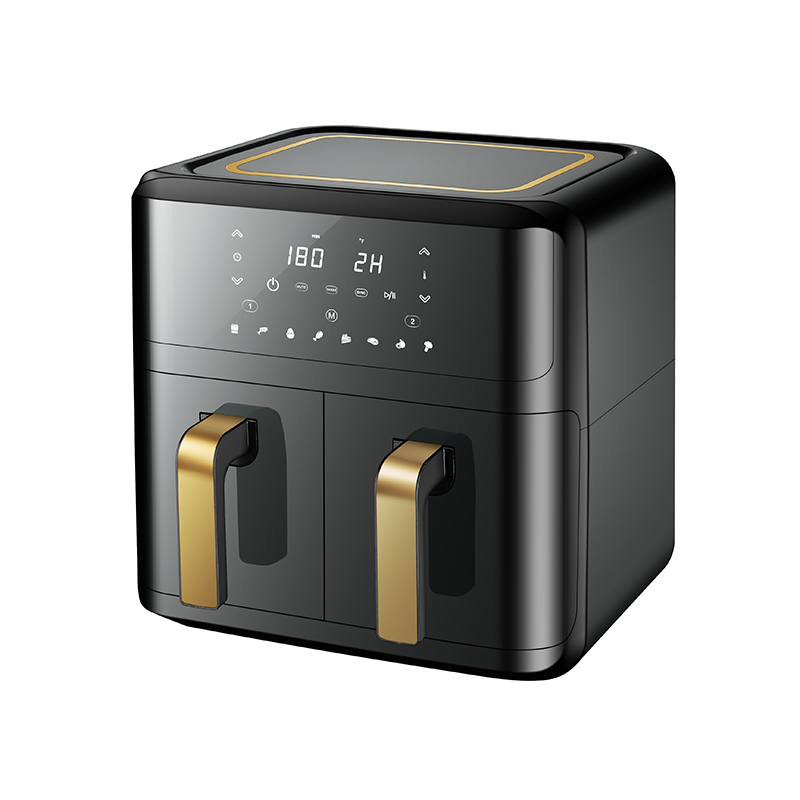
 DH-508A 6L Digital Air Fryer with 12 Preset MenusThe DH-508A 6 L digital air fryer offers twelve preset menus for frozen favorites, plus manual control and a dishwasher-safe fry pot and rack.View Product →
For households cooking frozen food several times a week, a 6 L digital model with twelve preset menus covers the widest range of frozen categories without manual guesswork. The preset structure effectively pre-loads the temperature and time combinations that frozen fries, wings and nuggets need, while the manual override stays available for anything unusual.
Air Fryer Ovens and Dual-Basket Models for Larger Frozen Batches
Once your frozen load regularly exceeds what a single basket can hold in one layer, the answer is not a bigger basket with deeper stacking. The answer is either a second cooking zone or an air fryer oven with a wire rack, because a rack lets you use two levels without compacting food into a single deep pile.
A dual-basket design lets you run fries at 200°C in one drawer and chicken wings at 180°C in the other, at the same time. Anyone who has cooked a family meal knows why that matters: the correct temperatures for frozen fries and frozen chicken are 20°C apart, and forcing them into one basket means compromising on both.
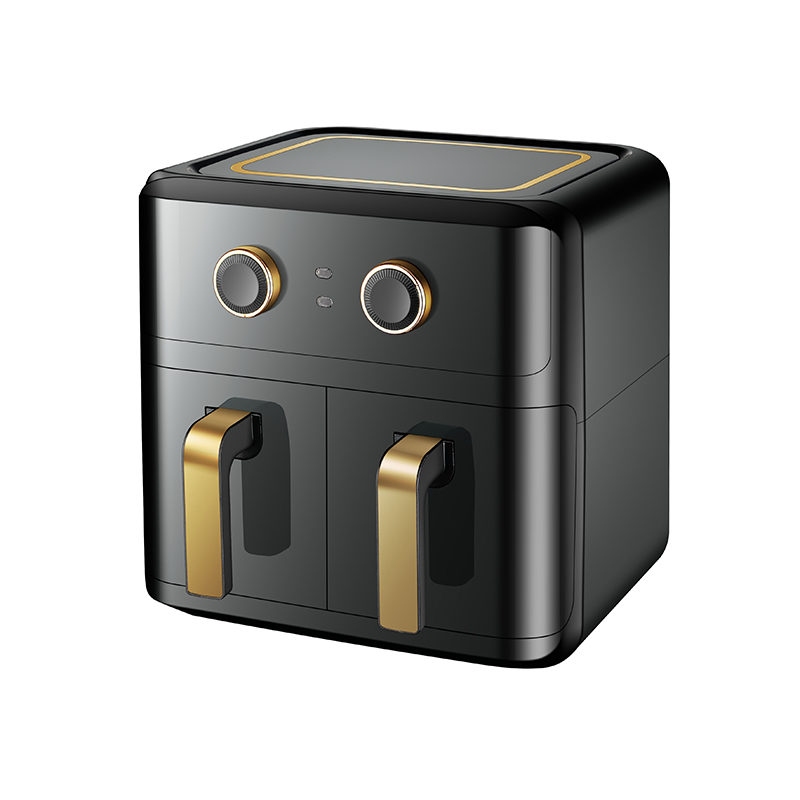 DH-801 Dual-Basket 15L Air Fryer OvenDH-801 dual-basket air fryer offers two independent cooking zones and a 15 L cavity, useful for frozen fries and wings at different temperatures.View Product →
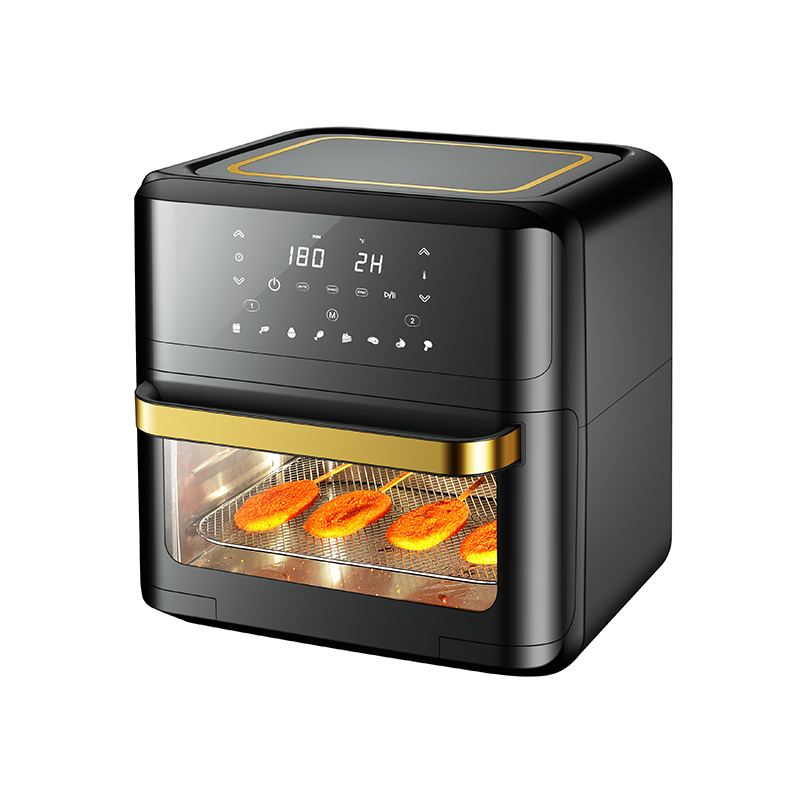
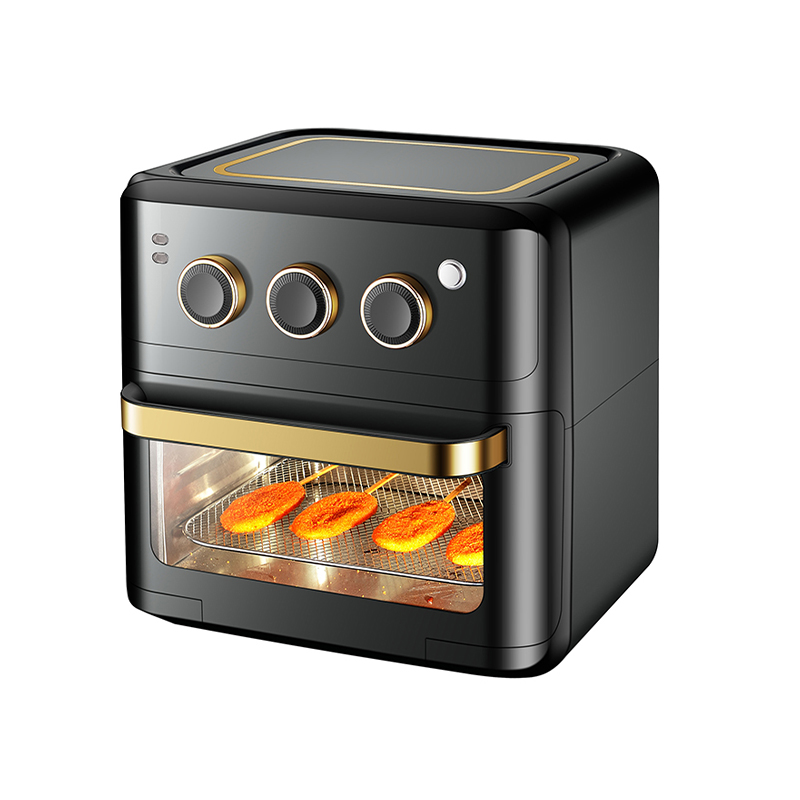
A 15 L air fryer oven with a visible front door changes the workflow for frozen food in a different way. You can watch the browning progress without pulling out a drawer and losing heat, which is genuinely useful in the last three minutes when a frozen product goes from pale to overdone fairly quickly. The larger cavity also handles frozen pizza, oven chips and tray-baked frozen items that simply do not fit a round basket.
Why a Viewing Window Helps More With Frozen Food Than With Anything Else
Frozen cooking has a narrower margin between underdone and overdone than chilled cooking, because the surface dries and browns quickly once the ice phase is finished. That is exactly the moment when a viewing window earns its place. Instead of opening the basket and dropping the temperature by 30°C or more, you glance through the glass, see whether the crust has set, and decide whether the last two minutes are needed.
The window is also the fastest way to diagnose the most common frozen food problem. If you can see liquid pooling at the bottom of the basket, the load is too heavy or the food had too much surface frost. If the food looks wet and shiny past the halfway mark, the temperature is too low. Both are visible long before the timer ends.
 DH-308A 5L Digital Air Fryer with Glass Viewing WindowDH-308A 5 L digital air fryer with glass viewing window and eight presets helps monitor frozen food for two to four people.View Product →
A 5 L digital model with a glass viewing window and eight presets is a sensible middle point for anyone cooking frozen food for two to four people. The window removes the guesswork in the final stage, and the 5 L basket still fits a full single layer of fries or a dozen chicken wings.
Frequently Asked Questions
Do I need to thaw frozen food before putting it in an air fryer?
No, for most products. Fries, nuggets, fish fingers, wings, meatballs and breaded items all cook better from frozen because the coating sets before it can absorb moisture. The exceptions are whole joints and whole birds, where the outer layers will overcook before the centre reaches a safe temperature.
Is it safe to cook frozen chicken in an air fryer?
Yes, provided the centre reaches 74°C. The risk with frozen chicken is not bacterial survival in a well-cooked portion, it is the assumption that a browned exterior means the inside is done. Use an instant-read thermometer at the thickest point and add roughly 10 minutes over the chilled timing.
Why are my frozen chips pale and soft in the middle?
Almost always overcrowding. If the pieces are touching or stacked, the hot air cannot reach the lower surfaces and the food steams in its own meltwater. Cook in two batches with a single layer each and the result changes completely.
Should I preheat the air fryer for frozen food?
For breaded items and thin-cut fries, a three-minute preheat gives a noticeably crisper shell. For thick items such as chicken breasts, meatballs and frozen vegetables, a cold start is actually better because the slower ramp lets the interior catch up.
Can I put frozen food on parchment paper in the air fryer?
Yes, as long as the paper is perforated or trimmed so it does not block the airflow path under the food. Solid foil or a solid sheet of paper traps liquid and stops the underside from crisping, and loose paper can also be lifted into the heating element by the fan.
How much longer does frozen food take compared with chilled food?
Plan on 30 to 50 percent more time at the same temperature. A 150 g chicken breast goes from roughly 17 minutes chilled to 28 minutes frozen. Thin breaded items like nuggets differ by only two to three minutes because their mass is small.
Does cooking from frozen affect the nutritional value?
Not in any meaningful way. Cooking time and temperature affect vitamin retention, not whether the food started frozen. In fact, frozen vegetables are often frozen shortly after harvest, which preserves heat-sensitive vitamins that degrade during long chilled storage.
Can I reheat cooked food in an air fryer from frozen?
Yes, and it works better than a microwave for anything that should stay crisp. Reheat at 160°C to 170°C rather than a high setting, because the goal is to bring the centre back to 74°C without drying the surface. Add a light spray of oil to foods that were originally fried.
Why does frozen food release so much water?
Freezing converts water in the food and in its coating into ice. When that ice melts in the basket, the moisture has to evaporate before browning can start. Food stored for a long time accumulates extra surface frost, which is why older freezer stock takes longer and produces more liquid.
Can I cook frozen food and fresh food together in one basket?
Not for anything with a meaningful time difference. The frozen portion needs longer and releases moisture that will soften the fresh portion. Use a dual-basket model or cook them in sequence, keeping the first batch warm while the second finishes.
 +86-0574-58011890