
 English
 Español
The stovetop is busy, the pan is splattered, and the kitchen smells of hot oil before the coffee is even ready. If that sounds familiar, you may be wondering whether those same fried eggs can come out of an air fryer instead. The short answer is yes. An air fryer can cook eggs beautifully when you treat the basket a little like a nonstick pan. Set the temperature to 180°C, allow 3 to 4 minutes for a sunny side up egg with a runny yolk, and finish with salt and pepper. No stovetop spatter and almost no oil left behind.
What makes this work is the difference between an air fryer and a standard oven. The air fryer pushes hot air around the egg rapidly, which sets the egg white evenly while the yolk can stay soft. That is the same basic idea behind convection cooking, just done in a basket-sized space with faster airflow. The result is an egg with lightly crisped edges if you use a little oil, a fully set white, and a yolk that can remain perfectly dippable.
Why the Air Fryer Turns Out a Reliable Fried Egg
An air fryer does not fry in the oil-immersion sense. It works by moving heated air quickly across the food surface. For an egg, the protein begins to set as soon as it receives enough heat. The rapid airflow around the exposed area of the egg sets the white even while the centre remains softer. This is why air-fried eggs can be cooked around the edges and still have a runny middle.
In our own kitchen testing, we noticed that the temperature does not need to be extreme. At 180°C, the egg white turns opaque within a few minutes, but the yolk still behaves the way it would in a well-managed frying pan. At higher temperatures the white can bubble and turn rubbery, which is why the 180°C to 190°C range works best.
If you want to understand the full science behind the hot air circulation, take a look at how the air fryer cooks the egg from a technical angle. The same airflow that produces crispy potatoes is also capable of cooking a delicate breakfast egg with less mess.
Step-by-Step: Frying Eggs in an Air Fryer
There are two easy ways to cook fried eggs in an air fryer: directly in the basket or in a small baking dish. Direct cooking works well when the basket has a reliable nonstick coating, while a small dish makes cleanup even easier. Both methods start with preheating.
- Preheat the air fryer to 180°C. Let it run empty for at least 3 minutes so that the basket reaches a stable temperature before the egg touches the surface.
- Lightly oil the basket or dish. A quick spray of oil is enough. The tiny amount of oil helps release the egg and creates a slightly crisp edge.
- Crack the egg gently. Add one or two eggs to the basket or a small heatproof dish. Avoid overlapping the whites too much if you want them to cook evenly.
- Cook for 3 to 4 minutes. Check the egg at the 3-minute mark. The white should be set and the yolk should still be soft.
- Slide the egg out with a thin silicone spatula. It should release easily from the nonstick surface when done.
- Season immediately. Add salt and pepper while the egg is still warm, then serve.
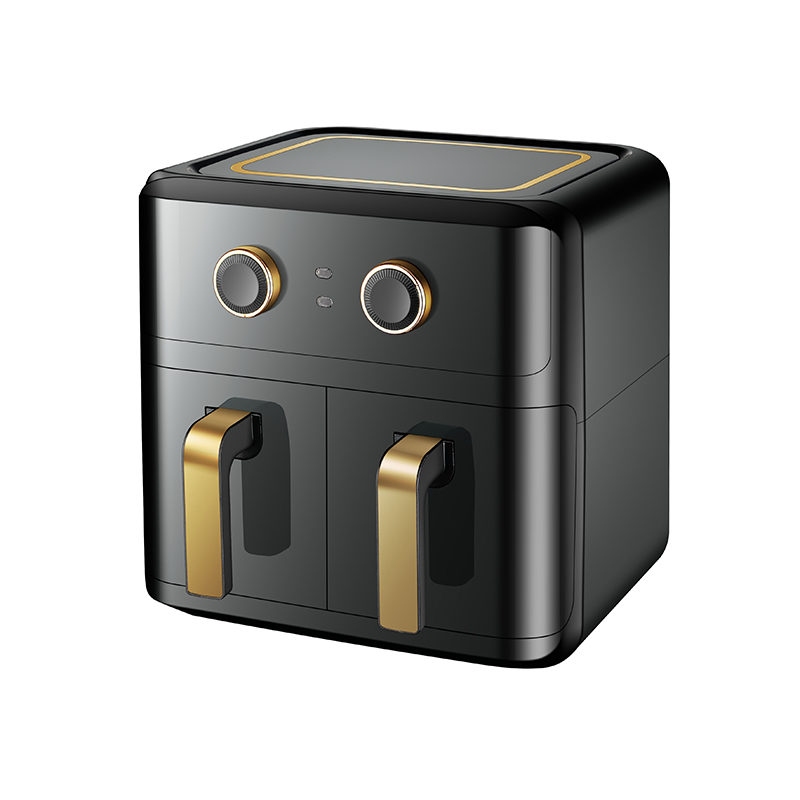
You do not need a complicated machine for this. If you prefer a straightforward approach, the dual-knob manual control models make it easy to set 180°C quickly and turn the timer without scrolling through menus. That simple workflow is one reason manual knobs remain popular in our product range.
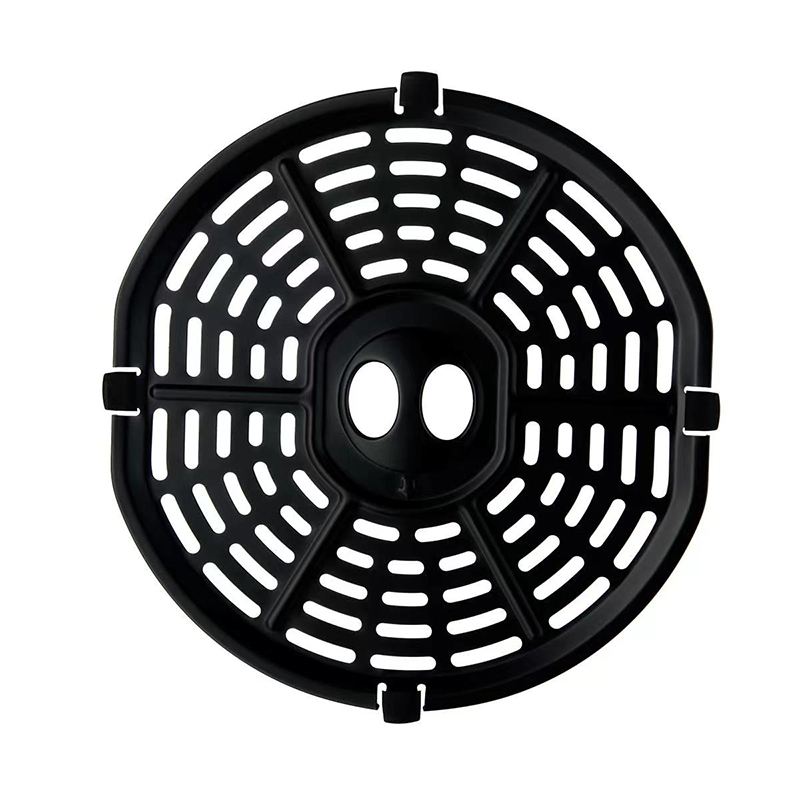 DH-601 Double Knob 1200W Air Fryer with Auto Shut-OffThis 3.5L air fryer offers straightforward dual-knob controls for quick temperature and timer settings, ideal for cooking eggs at 180°C with minimal fuss and a built-in safety shut-off.View Product →
Oil, Butter, or Non-Stick Spray?
Neutral oils with a higher smoke point work best in a hot basket. Canola, sunflower, and avocado oil are all good choices because they can handle 180°C without burning. A small amount of butter adds flavor, but it can brown faster in a strong airflow, so keep the temperature at about 180°C if you want a buttery taste. For most mornings, a fine mist of oil is enough to release the egg cleanly and keep the edges crisp without creating a pool of fat.
Time and Temperature Reference for Egg Doneness
The exact time depends on your air fryer size, wattage, and how many eggs you cook at once. The table below gives a practical starting point for a single serving.
| Egg style | Temperature | Time | Result |
|---|---|---|---|
| Sunny side up | 180°C | 3–4 minutes | Set white, runny yolk |
| Over easy | 180°C | 4–5 minutes | Soft yolk, thicker white |
| Over medium | 180°C | 5–6 minutes | Partially set yolk, tender white |
| Over hard | 180°C | 6–7 minutes | Fully set yolk, firmer texture |
| Baked egg | 175°C | 8–10 minutes | Silky, custard-like yolk |
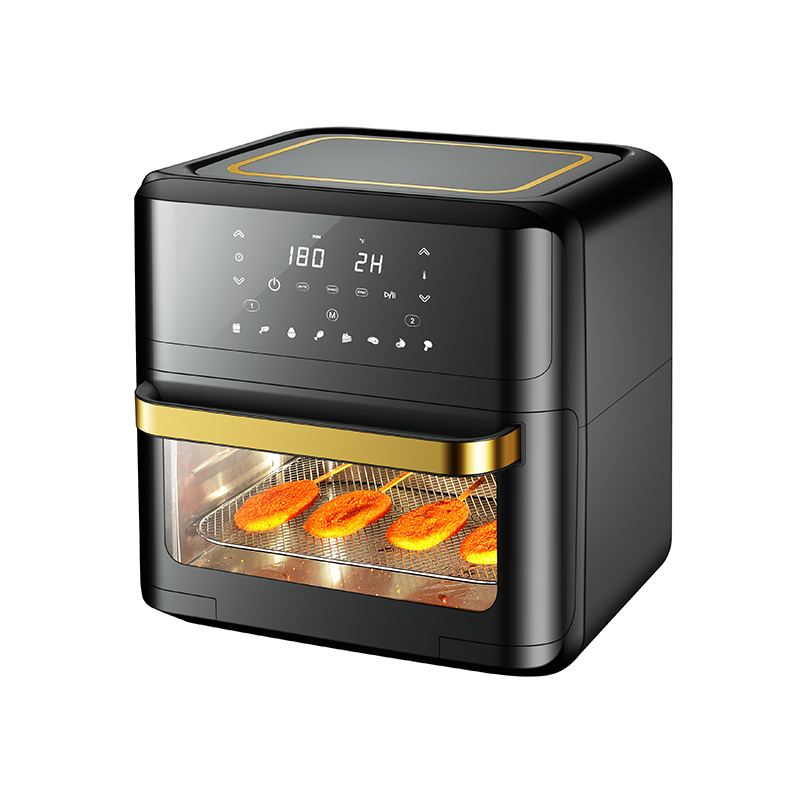
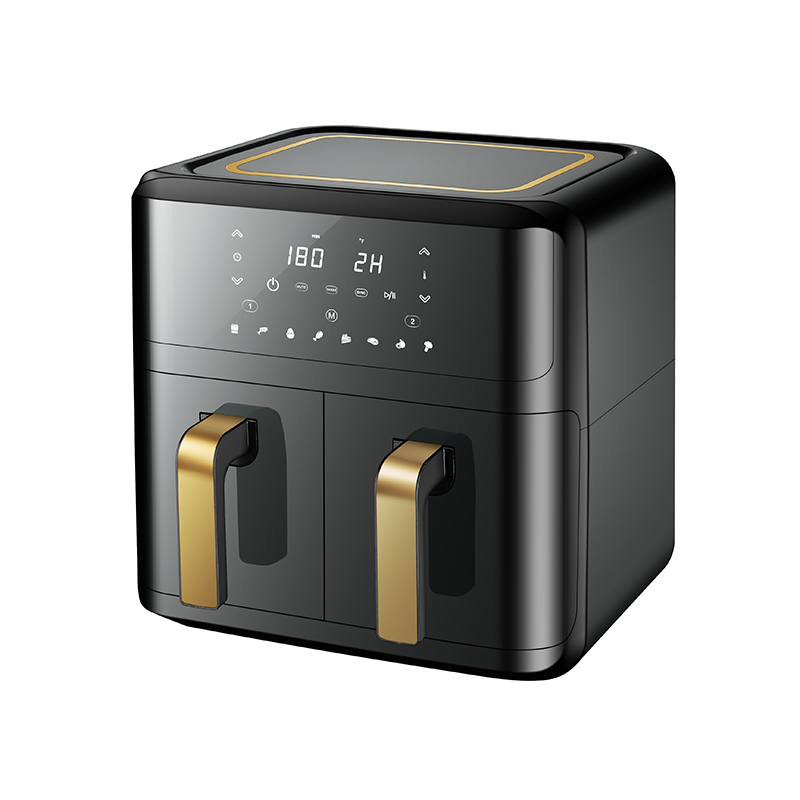
Temperature consistency matters more for eggs than for almost any other breakfast food. A wobbly temperature can set the white unevenly while the yolk becomes overly firm. Digital control models with preset cooking options hold the set temperature within a tighter window, which makes the timing easier to repeat every morning.
DH-608A Digital Touchscreen Air Fryer with 8 PresetsWith digital controls and eight programmable presets, this 3.5L air fryer maintains steady temperature, making repeatable egg cooking easier and more reliable each morning.View Product →What to Look For When Cooking Eggs in an Air Fryer
Not every air fryer is equally convenient for eggs. Based on our manufacturing and testing experience, three features make the biggest difference.
Nonstick Coating
The most important part of an egg-friendly air fryer is the interior coating. A clean, PFOA-free nonstick surface lets the cooked egg release with just a small angled spatula. Avoid metal tools that can scratch the coating.
Stable Temperature
Eggs respond quickly to temperature swings. A well-designed air fryer keeps the internal temperature steady instead of letting it drift upward. Consistent 180°C heat gives you predictability from one batch to the next.
Viewing Window
A viewing window lets you check the egg white without pulling the basket out. This is a small detail, but it avoids the cold-air interruption that can affect the final texture.
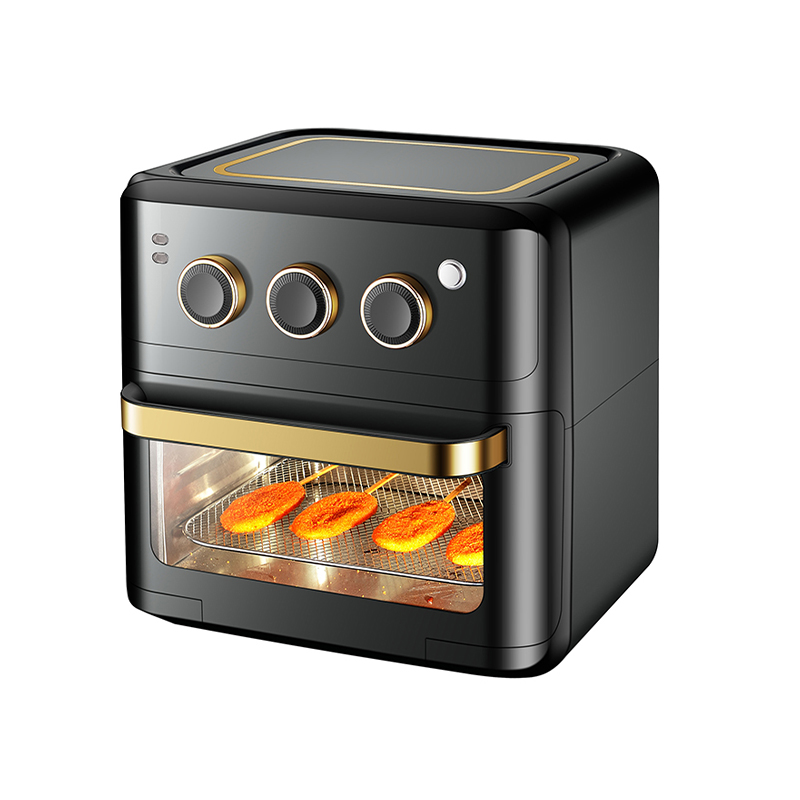
For home cooks who rely on visual cues, the observation window is especially useful. You can watch the white turn opaque and decide exactly when to pull the egg. That removes most of the guesswork.
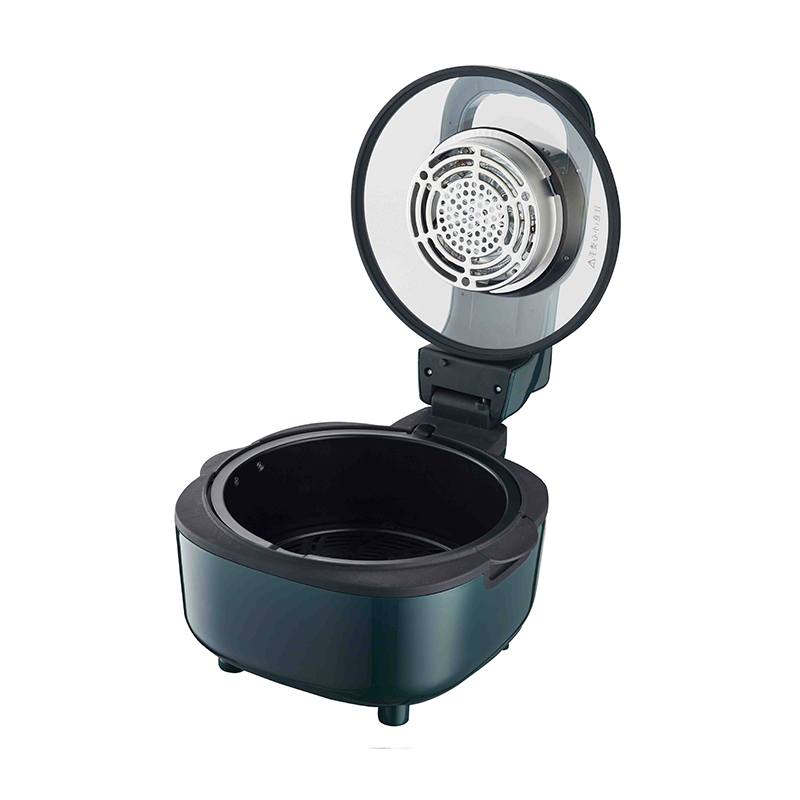 DH-308A 5L Air Fryer with Glass Viewing Window and 8 PresetsThis 5L air fryer features a glass viewing window so you can watch your egg whites set without opening the basket, while eight preset modes simplify consistent cooking.View Product →
Common Mistakes That Make Air Fryer Eggs Rubbery or Stuck
Most air fryer egg problems come down to simple missteps. If your first attempt is dry or sticky, check these points:
- Not preheating the basket. A cold surface makes the egg stick and slows down the cooking process. Always preheat for 3 minutes.
- Setting the temperature too high. Temperatures above 200°C can make the egg white bubble while the protein becomes rubbery. Stick to 180°C.
- Adding the egg directly to a dry basket. A quick spray of oil is still needed for release. Without any oil, the white can bond to the surface.
- Using parchment paper as a full liner. If you cover the whole basket, you restrict the airflow and the egg cooks unevenly.
- Overcrowding the basket. Leave space between eggs so that the hot air can reach every part of the white.
Why Air-Fried Eggs Save Oil and Cleanup Time
One of the main reasons people switch to an air fryer for fried eggs is the reduced oil absorption. A traditional pan-fried egg may absorb several grams of cooking oil, while an air-fried egg needs only the smallest film of oil to release cleanly. For everyday cooking, that translates into noticeably less fat and much less spatter.
Representative oil absorption for 100 g of cooked egg
Comparison based on typical home cooking portions and standard oil usage. Actual values vary with cooking time and oil volume.
There is also a cleanliness benefit. Fried eggs in a pan create hot oil droplets that end up on the stovetop and nearby surfaces. In an air fryer, the oil stays inside the basket or a small dish. Cleanup is limited to one nonstick surface, which makes weekday breakfasts less stressful.
Easy Ways to Serve Air Fryer Fried Eggs
Once you know how to cook the egg, the serving possibilities open up. These are some of the easiest ways to use air-fried eggs in a daily meal:
- Breakfast sandwich: Layer the egg on sourdough toast with melted cheese and a slice of tomato.
- Rice bowl: Add the egg on top of warm rice, greens, and a spoonful of chili crisp.
- Avocado toast: Spread mashed avocado on toast and place the air-fried egg directly on top.
- Ramen or noodle bowls: Use the egg as a quick topping for instant noodles or a simple broth-based meal.
Frequently Asked Questions About Frying Eggs in an Air Fryer
Can you fry eggs directly in the air fryer basket?
Yes, as long as the basket has a nonstick coating and is lightly oiled. Crack the egg into the preheated basket and cook at 180°C for 3 to 4 minutes. Use a thin silicone spatula to remove the cooked egg gently.
Do you need a special insert or dish?
No. A small heatproof baking dish, silicone egg mold, or even a personal-sized pie pan works well. If you want easier cleanup, the dish is helpful because you can add butter or oil directly to it.
What is the best temperature for fried eggs in an air fryer?
The best temperature is 180°C. At this setting, the egg white sets evenly and the yolk stays soft without becoming rubbery. You can lower it slightly to 175°C if you want a gentler, more custard-like result.
Why is the egg sticking even though the basket is nonstick?
This usually happens when the basket is not preheated, or when the egg is added without any oil at all. Preheating the basket and applying a thin layer of oil gives the white enough time to set before it can bond to the surface.
Can I cook multiple eggs in the air fryer at once?
Yes, but do not crowd them. Leave space between the eggs so that hot air can circulate freely. Cooking two eggs at the same time usually requires an extra minute compared with a single egg.
Is an air-fried egg healthy?
Air-fried eggs are lower in cooking oil than traditional pan-fried eggs, which makes them a good option for a lower-fat breakfast. The egg itself retains its protein and nutrients, while the amount of added fat stays minimal.
So, can you fry eggs in an air fryer? Yes, and once you find the right timing, it may become your default method. Preheat to 180°C, oil the basket lightly, cook for around 4 minutes, and check the texture before deciding whether to go longer. The clean-up is quick, the cooking is hands-free, and the egg can turn out just as good as one from a skillet.
 +86-0574-58011890