
 English
 Español
The short answer is a confident yes: you absolutely can fry an egg in an air fryer. In fact, many professional kitchens and home cooks now prefer it over a stovetop pan because the circulating hot air delivers even heat without the need for flipping or constant attention. The real question is not whether you can, but how to dial in the right temperature, time, and technique to achieve your preferred yolk consistency—runny, set, or somewhere in between.
From an engineering standpoint, an air fryer is essentially a high‑velocity convection oven. Its rapid air circulation transfers heat more efficiently than still air, which means the egg cooks from all directions simultaneously. This gives you a beautifully set white and a yolk that you can control precisely. Below we break down every variable that matters, backed by both cooking science and the design choices we make as a manufacturer.
Why an Air Fryer Works So Well for Fried Eggs
The reason air fryers excel at eggs is the same reason they excel at fries and chicken wings: consistent, high‑speed airflow that eliminates cold spots. In a pan, the heat source only contacts the bottom surface, so you must rotate the pan or flip the egg for even cooking. In an air fryer, the 360° hot air wraps around the egg, cooking the top and sides simultaneously. This reduces cooking time and prevents the dreaded rubbery white with a runny center that you sometimes get from a pan.
Additionally, the non‑stick coating on the basket (standard on all our models) means you need very little oil—often just a spritz. This makes the egg healthier and easier to release. The temperature range of most air fryers (80 °C–200 °C) allows you to gently cook the white without over‑hardening the yolk.
Traditional Pan Frying
- Heat concentrated on bottom
- Requires flipping or basting
- More oil needed to prevent sticking
- Risk of burning edges
- You must stand at the stove
Air Fryer Frying
- Even 360° hot air circulation
- No flipping required (most methods)
- Minimal oil (1–2 sprays)
- Consistent browning
- Set timer and walk away
The table below summarises key differences that affect your decision.
| Parameter | Stove Pan | Air Fryer (150 °C) |
|---|---|---|
| Total cooking time | 2–3 min | 4–6 min (preheat included) |
| Oil used | 1–2 tbsp | ~1 tsp or spray |
| Evenness | Moderate | High |
| Hands‑on time | Full | Minimal |
| Yolk control | Good with skill | Excellent with time/temp |
Step‑by‑Step Guide: How to Fry an Egg in an Air Fryer
The process is straightforward, but a few details determine success. Follow this sequence, and you will get a restaurant‑worthy egg every time.
Method 1: Sunny‑Side Up (Runny Yolk)
This is the most popular style. The goal: fully cooked white, liquid yolk, no browning on the edges.
- Preheat your air fryer to 160 °C (320 °F). Preheating is critical because a cold basket will cause the egg to spread and stick before the air reaches temperature.
- Prepare a small pan or silicone cup. While the basket itself is non‑stick, a small oven‑safe ramekin or a silicone egg cup gives you a defined shape and makes cleanup easier. Lightly spray with oil.
- Crack the egg into the prepared cup. Season with salt and pepper if desired.
- Cook for 4 minutes. Check at 3:30 for a very runny yolk. For a slightly thicker white edge, go to 5 minutes.
- Remove with a silicone spatula. The egg slides right out.
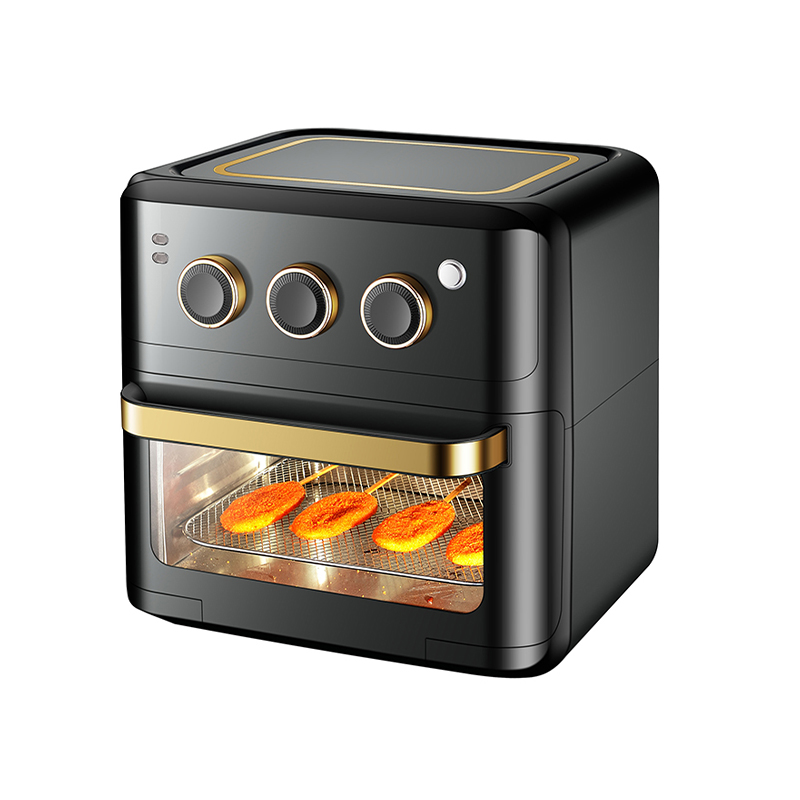
Pro tip from our R&D team: Models with a viewing window let you monitor the yolk without opening the basket. Opening mid‑cooking releases heat and can change the set time by 30–60 seconds. That is why many of our  5L Digital Air Fryer with 8 Presets and Glass Viewing WindowThe glass viewing window lets you monitor the egg white setting without opening the basket, keeping heat stable for perfect sunny-side up or over-easy results.View Product → are popular for egg recipes – you keep the heat inside while watching exactly when the white sets.
Method 2: Over‑Easy / Over‑Medium
If you want the white fully set on both sides but the yolk still runny, you have two options. The first: cook sunny‑side up for 4 minutes, then carefully flip the egg using a small spatula and cook for another 1–2 minutes at 150 °C. The second: use a silicone egg ring and cook at 340 °F (170 °C) for 6 minutes total without flipping—the high air velocity cooks both sides through direct heat and reflection off the basket wall.
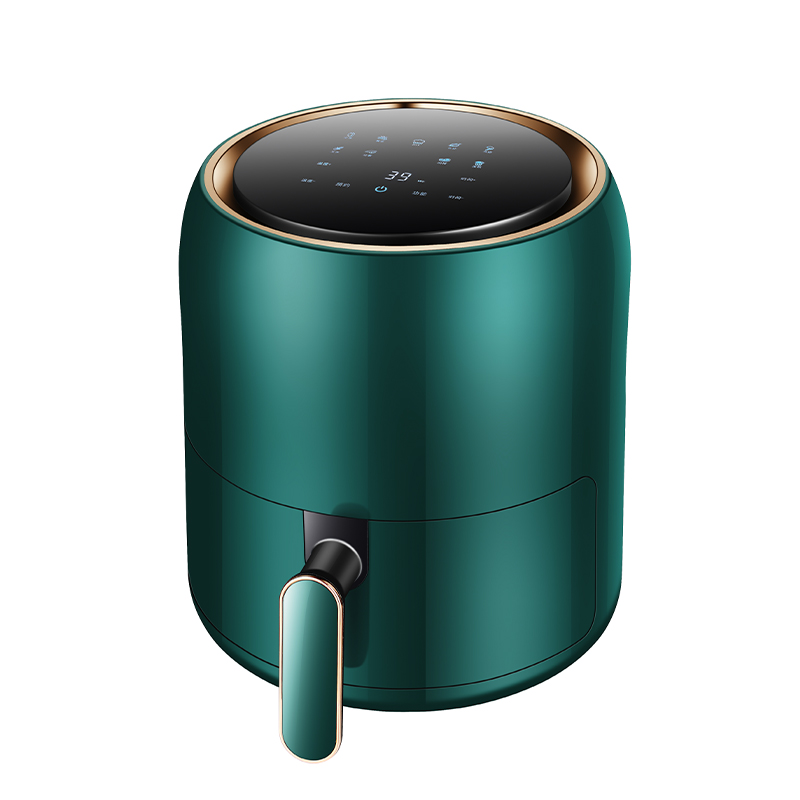
Most of our customers find the no‑flip method easier, especially with digital models that maintain temperature precisely. Our  3.5L Digital Air Fryer with 8 Presets and Rapid HeatingAn 'Egg' preset automatically sets 160°C for 5 minutes, making over-medium eggs effortless. Precise digital control ensures consistent results every time.View Product → offers an ‘Egg’ preset that automatically sets 160 °C for 5 minutes, which works perfectly for over‑medium.
Method 3: Hard‑Fried (Fully Set Yolk)
For a yolk that is firm all the way through—ideal for sandwiches or chopping into salads—cook at 150 °C for 7–8 minutes. The lower temperature prevents the white from becoming leathery while the yolk slowly solidifies. Use a small dish as above. If you like a browned edge, increase to 180 °C for the last 1 minute.
Key Factors That Affect Your Egg
Not all air fryers are identical. Understanding how design variations influence cooking results helps you choose the right method and, if you are in the market, the right appliance.
Air Fryer Power (Wattage)
Most basket‑style air fryers range from 1200 W to 1700 W. Higher wattage does not necessarily mean faster egg cooking, because the air volume and fan speed also play roles. In our tests, 1500 W models (common in 5 L–6 L sizes) give the most consistent results at 160 °C. Lower‑wattage units may need an extra minute; higher‑wattage units may require reducing temperature by 10 °C to avoid over‑cooking the white edge.
Basket Size and Egg Positioning
In a larger basket (6 L), an egg placed near the center will cook slightly slower than one near the back where airflow is strongest. For best results, place the ramekin in the center of the basket. Our 3.5 L and 5 L models have a more uniform air distribution, which is why they are often preferred for small‑batch items like eggs.
Temperature Accuracy
Digital‑control air fryers typically hold temperature within ±5 °C, while mechanical knobs can have a wider swing. If you are using a manual model, invest in an oven thermometer and adjust the knob accordingly. For eggs, precision matters more than for vegetables: a 10 °C difference changes the yolk from runny to hard in about 90 seconds.
Frequently Asked Questions
Do I need to flip the egg?
No, not for sunny‑side up. For over‑easy, flipping is optional; you can achieve the same result with a slightly longer cook at lower temperature. The air circulation cooks the top surface as well as the bottom.
What kind of container should I use?
A small oven‑safe ceramic or glass ramekin works best. Silicone egg cups are also fine. Avoid paper cups or uncoated aluminium foil, as the egg may stick. The non‑stick basket alone can work if you spray it well, but the egg white may spread thinly across the basket, making it harder to remove cleanly.
Can I fry two eggs at once?
Yes, provided you use two separate cups placed side by side. Allow 30‑60 seconds extra time because the basket will have more mass to heat. In a 6 L basket you can fit three small ramekins.
What is the best temperature for a runny yolk?
160 °C (320 °F) for 4 minutes. If you prefer a slightly thicker white without browning, drop to 150 °C and cook for 5 minutes.
Should I preheat the air fryer?
Absolutely. Preheating for 3‑4 minutes ensures the basket and air are at the target temperature when the egg goes in. Without preheat, the egg will spread more and the total time will be less predictable.
Can I add cheese or other toppings?
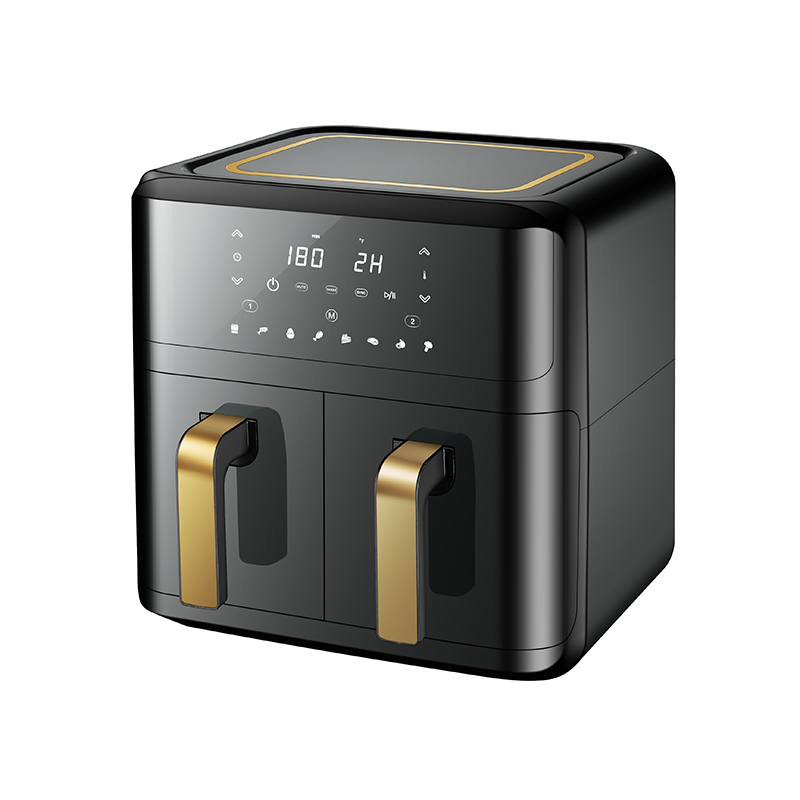
Add shredded cheese after the first 3 minutes of cooking so it melts without burning. For “egg in a hole” (egg cooked inside a slice of bread), place the bread on a small trivet or directly on the basket, crack the egg into the cut‑out, and cook at 160 °C for 6 minutes – this is a great use for an 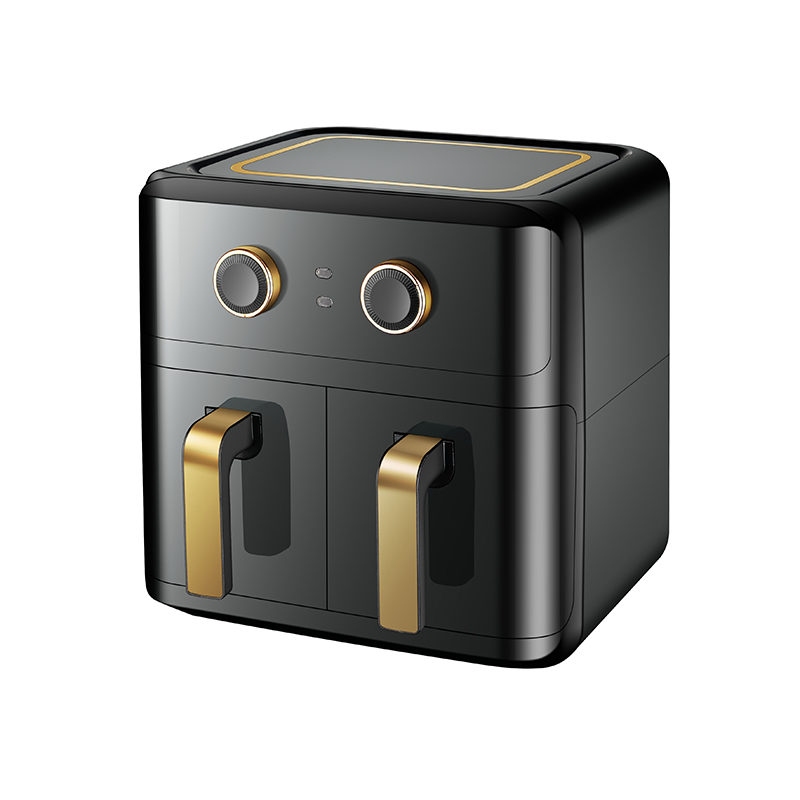 15L Dual-Basket Double Air Fryer with Manual ControlsIts spacious 15L cavity holds a full slice of bread flat, ideal for 'egg in a hole' recipes. Dual baskets allow cooking two dishes simultaneously.View Product → that can hold a full slice of bread flat.
Practical Tips from a Manufacturer’s Perspective
Having tested hundreds of egg recipes across dozens of prototype air fryers, here are the insights that consistently improve results:
- Use a digital model for eggs. Mechanical timers can drift ±1 minute, which is the difference between perfect and overdone. Digital controls give you repeatable accuracy.
- Don’t overcrowd. The air fryer relies on free airflow. If you block the fan with multiple ramekins, cooking becomes uneven. Stick to two eggs maximum.
- Oil spray is your friend. One second of spray (about 1 g of oil) is enough to prevent sticking and add a subtle golden finish. Avocado oil has a high smoke point and neutral flavour.
- Let the egg rest 30 seconds after cooking. The residual heat finishes the cook and allows the white to firm up. This is especially important if you plan to flip or move the egg.
- Clean the basket promptly. Egg residue can bake onto the basket if left to cool. Wipe with a damp cloth or soak in hot water for 5 minutes – never use abrasive scouring pads that damage the non‑stick coating.
As a manufacturer, we design our non‑stick coating to withstand daily egg cooking without degradation. The basket of our DH series uses a PTFE‑free ceramic coating that is food‑safe and durable up to 230 °C. This ensures that even after hundreds of eggs, the release performance remains consistent.
Visual Guide: Temperature vs. Yolk Consistency
The following simple chart shows the relationship between temperature and cooking time for a large egg cooked in a 1500 W digital air fryer. The yolk consistency changes dramatically over a narrow window.
Notice that the recommended temperature for sunny‑side up (160 °C) gives you the widest tolerance window. Going higher than 170 °C increases the risk of a hard yolk before the white is fully cooked, because the thinner white sets faster than the thicker yolk.
How Air Fryer Models Affect This Chart
If you own a compact 3 L model with a 1200 W heater, add about 1 minute to each time. A large 6 L model with 1700 W may reach the same doneness 30 seconds earlier – adjust your timer accordingly. The chart above is calibrated for our 3.5 L digital air fryer, which is the most common size for egg‑focused cooking. You can view detailed specifications of our 3.5 L digital air fryer series on our product page.
Common Mistakes and How to Avoid Them
Mistake 1: Not preheating
Result: Egg spreads thin, sticks, and cooks unevenly. Solution: Always preheat 3–4 minutes.
Mistake 2: Using too high temperature
Result: White becomes rubbery, yolk hardens too fast. Solution: Keep it at or below 170 °C for runny yolks.
Mistake 3: Overcrowding the basket
Result: Hindered airflow, uneven cooking. Solution: Cook only 1–2 eggs at a time.
Mistake 4: Opening the basket too often
Result: Temperature drop extends cooking time unpredictably. Solution: Use a viewing window model or rely on a timer.
Mistake 5: Using too much oil
Result: Oil pools and steams the egg instead of frying. Solution: A single light spray is enough.
Beyond the Basic Egg: Variations to Try
Once you master the standard fried egg, the air fryer opens up a range of egg‑based dishes:
- Egg bites or mini frittatas: Whisk eggs with cheese and vegetables, pour into silicone muffin cups, cook at 160 °C for 10–12 minutes.
- Scotch eggs: Wrap hard‑boiled eggs in sausage meat, coat with breadcrumbs, air fry at 180 °C for 12 minutes – the egg will stay firm inside.
- Egg baked in avocado: Halve an avocado, remove pit, crack an egg into each half, season, and air fry at 160 °C for 8 minutes.
- Shakshuka in the air fryer: Use an oven‑safe skillet, sauté onions and peppers in the air fryer basket (5 min at 180 °C), add tomato sauce and eggs, cook 6–8 min at 160 °C.
These recipes benefit from the even heat and the ability to walk away while they cook. For larger dishes, our 15L Dual-Basket Double Air Fryer with Manual ControlsIts spacious 15L cavity holds a full slice of bread flat, ideal for 'egg in a hole' recipes. Dual baskets allow cooking two dishes simultaneously.View Product → provides the space needed for a full‑size skillet or multiple ramekins.
Should You Buy an Air Fryer Just for Eggs?
If you eat eggs daily, an air fryer can be a worthwhile investment – not only for the convenience but for the consistent results. However, if you are a one‑egg‑per‑week cook, the cost may not justify itself. Many of our customers tell us that after they tried fried eggs in an air fryer, they virtually stopped using their stovetop pan for eggs. The ease of cleanup and the ability to ‘set and forget’ are the most cited advantages.
From a manufacturer’s perspective, we see that models with digital presets and a viewing window have the highest satisfaction rates for egg cooking. The combination of precise temperature control and visual feedback removes all guesswork. If you decide to purchase an air fryer primarily for eggs, look for these features.
 +86-0574-58011890