
 English
 Español
You set the temperature to 180°C, slide a basket of frozen fries into the air fryer, and wait. Ten minutes later, the fries near the back of the basket are dark brown while the ones in the middle stay pale and soft. That pattern is not random. It comes from two weaknesses: a thermostat that lets the temperature drift away from the value you set, and air that moves too slowly to carry heat evenly to every piece of food.
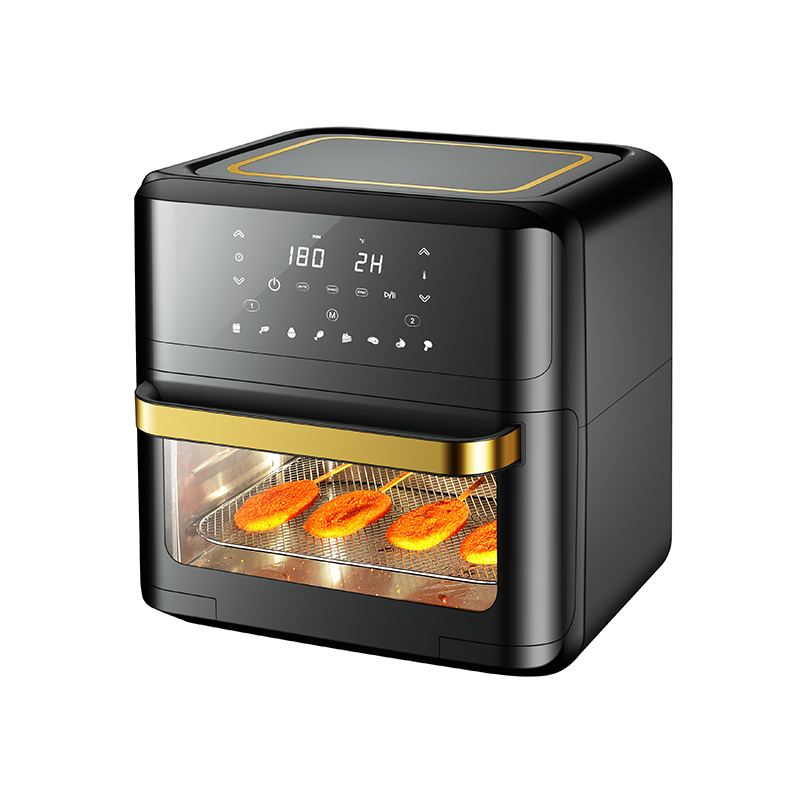
An adjustable thermostat electric air fryer with rapid circulation is designed to fix both problems. The thermostat holds the temperature close to the setting, and the high-speed airflow carries heat around and through the basket at a much faster rate. Together, these two systems produce food that is evenly browned, cooked through at the center, and ready sooner than food cooked in a conventional oven. This article explains how the technology works, what it means for daily cooking, and what to check before you buy.
What Does an Adjustable Thermostat Do Inside an Air Fryer?
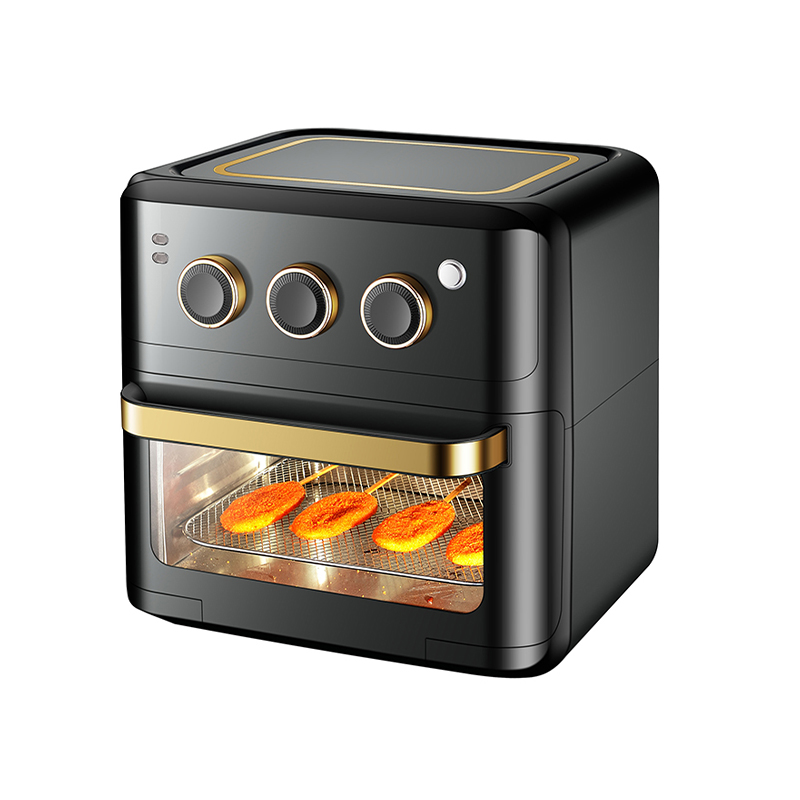
Inside every electric air fryer, the thermostat has one job: measure the temperature of the cooking chamber and switch the heating element on or off to keep the temperature near the value you select. In a fixed-temperature unit, the element runs at full power without meaningful regulation, so surfaces brown quickly while the interior lags behind. With an adjustable thermostat, you can match the heat to what you are cooking: 160°C for fish and delicate vegetables, 180°C for fries and breaded foods, and 200°C when you want a deep, crisp crust on chicken or pork.
The accuracy of that control depends on the system inside the unit. Electronic thermistors react faster than mechanical parts and keep the chamber temperature within a narrower band. Mechanical thermostats are simpler, cost less, and have a good service life, but they allow a wider swing above and below the target temperature. The table below summarizes the main differences.
| Control Type | How It Maintains Temperature | Typical Accuracy | Best Suited For |
|---|---|---|---|
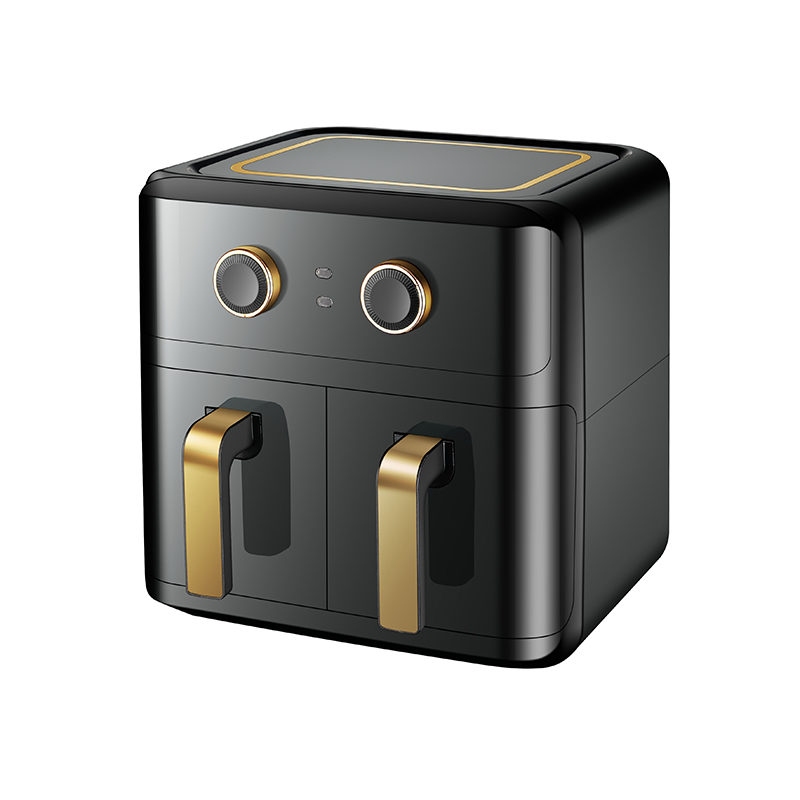
| Manual dial | A bimetallic strip or capillary thermostat switches the heating element on and off; you set the target by turning the dial. | Wider swing, roughly +/-10°C to +/-15°C | Simple operation, budget-friendly models, durable mechanical parts |
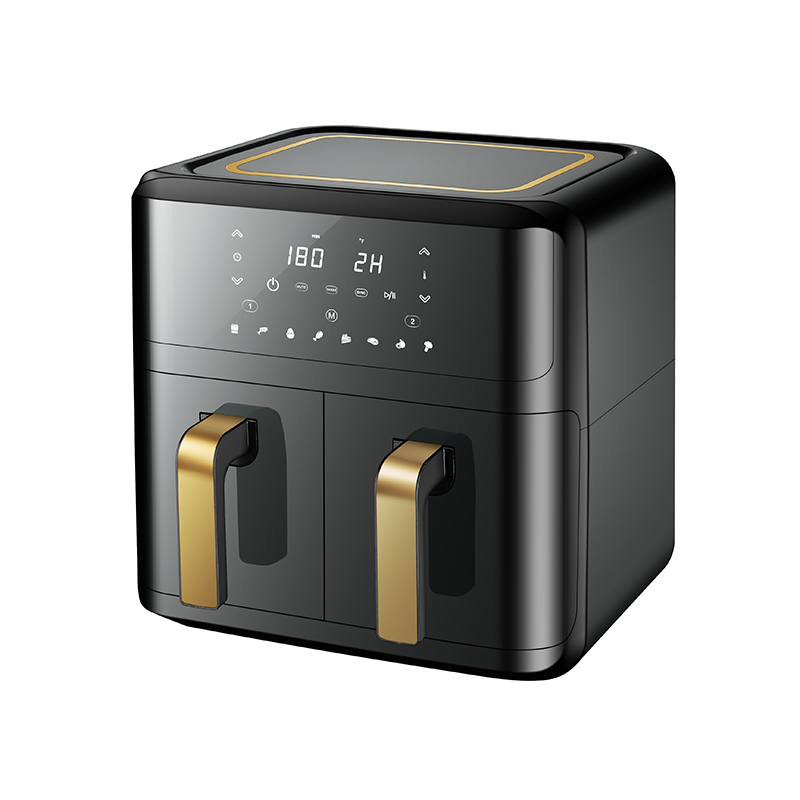
| Digital panel | A thermistor reads the chamber temperature and an electronic controller cycles the element around the set value. | Tighter swing, roughly +/-3°C to +/-5°C | Repeatable results, preset programs, precise time and temperature control |
Digital control also adds preset programs that combine a temperature and a time for common foods. When you select the preset for fries, the unit sets the temperature itself and turns off when the cycle ends. If you cook the same items often, digital control gives you repeatability: the next batch behaves like the last one. For a closer look at the control mechanism, see how the temperature control of an adjustable electric air fryer is achieved.
Why Rapid Circulation Makes the Thermostat More Effective
The heating element generates heat, but heat alone does not cook food evenly. The fan and the air duct decide where that heat goes. Rapid circulation means the air inside the chamber is constantly forced across the heating element and then onto the food surface from multiple directions. The moving air strips away surface moisture, encourages browning, and transfers heat far more efficiently than still air. This rapid heat transfer in air frying is the reason an air fryer can give you a crisp exterior in minutes rather than the longer times a static oven needs.
Strong airflow also reduces temperature differences inside the chamber. In a still oven, warm air collects near the top and cooler spots form near the door. In a well-designed air fryer, the duct directs fast-moving air around the basket so the temperature at the top, bottom, and sides stays close to the thermostat setting. That matters because fast-moving air amplifies small temperature errors; a tighter thermostat keeps the whole system predictable.
Airflow Details to Look For
- A heating element placed close to the fan outlet, so air is heated immediately before it reaches the food.
- An inclined or curved fan blade design that moves a high volume of air without excessive noise.
- An air duct that pushes hot air downward and then upward around the basket, covering both the top and underside of the food.
- A perforated basket with open sides and bottom, so air can reach the surface of every piece rather than only the top layer.
How Adjustable Temperature and Rapid Circulation Work in Daily Cooking
Seen from the kitchen, the combination of a stable thermostat and rapid circulation changes the result of everyday dishes. The effect shows up most clearly in four common foods.
Frozen fries
A stable 180°C setting and fast airflow produce a golden, crisp coating with a soft center, instead of pale patches and overcooked edges.
Chicken wings
The constant airflow renders skin fat quickly, leaving the skin crispy and the meat moist. Excess fat collects in the basket instead of staying on the food.
Roasted vegetables
Even heat caramelizes the surface of peppers, carrots, and zucchini while the centers stay tender. You can roast a single layer without oil pooling in the pan.
Reheated leftovers
Pizza, fried chicken, and spring rolls regain their original crispness in a few minutes, because the air removes surface moisture without drying out the interior.
The cooking guide below gives a starting point for common foods. Times vary by portion size and model, so treat the values as a baseline and adjust after the first batch.
| Food | Set Temperature | Approximate Time | Tips |
|---|---|---|---|
| Frozen fries | 180°C | 12-18 min | Shake the basket halfway through |
| Chicken wings | 190°C | 20-25 min | Turn once so both sides crisp evenly |
| Salmon fillet | 170°C | 10-14 min | Lightly brush with oil for moist results |
| Muffins or small cakes | 160°C | 15-20 min | Check doneness with a skewer before removing |
If you frequently cook for two or three people, a 5L basket with digital presets gives you room to adjust both temperature and timing without watching the unit constantly.
 DH-202A Smart Air Fryer with 8 Preset Programs and Safety ApprovalsWith a 5L capacity, 1500W power, and multiple safety certifications, this model provides even hot air circulation and dishwasher-safe parts, ideal for households needing flexible temperature and time control.View Product →
What to Look for When Buying an Adjustable Thermostat Electric Air Fryer
Price is easy to compare; performance is not. A few specifications separate a predictable air fryer from one that burns the outside and leaves the center raw. The list below covers the details that affect everyday results.
Key Specifications to Check
- Temperature range: look for a range close to 80-200°C. A wider range gives more flexibility for low-temperature reheating and high-temperature crisping.
- Control type: digital panels offer precision and presets; manual dials are simpler and usually cheaper to maintain.
- Wattage versus capacity: a 3.5L basket typically uses 1200-1500W, while a 6L basket needs 1500W or more to hold temperature under load.
- Basket design: a perforated, nonstick basket with cool-touch handles makes cleaning easier and reduces the chance of burns.
- Safety features: overheating protection, auto shut-off when the basket is removed, and food-grade materials are the minimum to expect.
| Feature | Why It Matters | What to Check |
|---|---|---|
| Adjustable thermostat | Lets you match heat to the food instead of relying on one fixed level | Temperature range and the control type, manual dial or digital panel |
| Rapid circulation fan | Moves hot air across all food surfaces for even browning | Fan speed, number of fan blades, and air duct design |
| Capacity | Determines how much food you can cook in one batch | 3.5L for one or two people; 5L to 6L for families |
| Safety and certification | Reduces the risk of overheating, burns, or harmful materials | Overheating protection, auto shut-off, food-grade basket, CE/GS/ETL/UL marks |
A test in your own kitchen is worth more than a long specification list. If possible, check the stated temperature range and wattage before purchase, and look at the build quality of the basket, tray, and control panel. You can compare models across the full air fryer range to see which capacity and control style fit your routine.
 DH-508A Smart 6-Liter Multifunctional Air Fryer with 12 Preset MenusThis 6L digital air fryer features 12 preset cooking options, including a cookie setting, and operates at 1500W. Its compact design suits small to medium families looking for versatile, low-oil meal preparation.View Product →
Materials, Safety, and Long-Term Reliability
The performance of an air fryer depends on more than the heating element and fan. Materials and safety systems decide how long the unit lasts and how safe it is in daily use. The basket and tray should be food-grade nonstick and free of BPA, because they come into direct contact with food at high temperature. The heating element should be enclosed, so crumbs and oil cannot fall directly onto it and burn.
Safety electronics matter too. Overheating protection cuts power if the chamber temperature rises above a safe limit, and auto shut-off turns the unit off when the timer ends or the basket is pulled out during cooking. Cool-touch housing and handles keep the exterior at a safe temperature even when the inside is hot. Units produced by the same factory with in-house molding and quality checks tend to have more consistent assembly from one batch to the next. International safety marks such as CE, GS, ETL, and UL indicate that a product has passed recognized testing programs.
Frequently Asked Questions
What is the best temperature for frozen fries in an adjustable air fryer?
Use 180°C for 12 to 18 minutes, depending on thickness and portion size. Shake the basket once or twice during cooking so the fries brown evenly. If they need more color, increase the temperature to 190°C for the final two minutes.
Is digital temperature control worth the extra cost?
Digital control gives tighter temperature regulation, repeatable settings, and preset programs. If you cook a small range of items and prefer a simple dial, manual control is perfectly usable. If you want consistent results without adjusting time and temperature each time, digital control is worth the difference.
Does rapid circulation actually cook faster than a conventional oven?
Yes. Moving air transfers heat to food faster than still air, so preheating takes less time and the total cooking cycle is typically 20 to 30 percent shorter. This is most obvious for breaded foods, fries, and frozen items.
Can I bake or roast in an air fryer with adjustable temperature?
You can bake muffins, small cakes, and single-layer roasts, and reheat pizza or fried food with good results. The chamber is smaller than a full oven, so adjust portion sizes and check doneness a few minutes earlier.
How do I keep the temperature accurate over time?
Clean the basket and interior regularly to prevent oil buildup, make sure the air outlet on the back is never blocked, and inspect the heating element for debris. A clean unit holds temperature more consistently and produces more even browning.
An adjustable thermostat electric air fryer with rapid circulation is more than a feature list. The thermostat gives you control over the cooking environment, and the circulation system makes that control deliver even results across the whole basket. By choosing a model with a clear temperature range, a control system you understand, and materials you trust, you get a kitchen appliance that handles daily cooking with less oil, less waiting, and more predictable browning.
 +86-0574-58011890